
Views: 0 Author: Site Editor Publish Time: 2026-08-07 Origin: Site


Investing in a branded metal accessory demands a delicate balance. You must weigh brand aesthetics against harsh manufacturing realities. A mismatch here often causes frustrating delays or ruined product batches.
Poorly chosen application methods lead to muddy details, chipped paint, or blown budgets. Decision-makers require a predictable framework to evaluate different production methods. This applies whether you source a premium retail product or a high-volume giveaway. You need absolute certainty before approving mass production. Precision prevents costly manufacturing errors.
We will objectively compare enamel, printing, engraving, and die-casting methods below. You will learn how to evaluate these processes on durability, cost at scale, and design fidelity. The right choice ensures your artwork translates perfectly into a tangible, long-lasting product. We will guide you through the technical constraints of each method.
Choosing the correct manufacturing technique requires careful logo analysis. You cannot force a complex digital design into a restrictive physical medium. Metal behaves differently than paper or digital screens. We evaluate four core constraints before starting any production run.
Best Practice: Always conduct a visual audit of your branding first. Count your distinct colors. If you count more than six colors, reconsider traditional enamel. High color counts drive up unit costs exponentially.
The traditional, jewelry-like standard for an enamel logo keychain remains incredibly popular. Manufacturers use raised metal ridges to separate colored liquid enamel. This process mimics classic stained glass techniques. It delivers a premium, classic aesthetic.
Hard enamel undergoes a rigorous baking process at extreme temperatures. Technicians then polish the surface completely flush. It offers a smooth, scratch-resistant finish. Brands rely on this method for premium corporate gifts or high-end retail merchandise. The flat surface feels substantial and expensive.
Soft enamel air-dries instead. This curing process leaves a distinctly textured surface. The metal ridges sit slightly higher than the dried paint. It feels highly tactile. It is also much more cost-effective than its hard counterpart. We recommend this for bold, high-contrast designs requiring vibrant colors.
Implementation risks exist across both types. Enamel cannot reproduce gradients. It rejects drop shadows or CMYK blends completely. It requires a strict minimum line thickness. Lines must exceed 0.2mm to hold the liquid securely. Bleeding occurs if boundary lines remain too thin.
The following chart illustrates the core differences between these two traditional methods.
| Feature | Soft Enamel | Hard Enamel |
|---|---|---|
| Surface Texture | Textured (Raised metal ridges) | Smooth (Polished flat) |
| Durability | Moderate (Paint sits below metal) | High (Bake-hardened finish) |
| Cost Efficiency | Highly cost-effective at scale | Premium pricing due to polishing |
| Color Matching | Pantone Solid Coated | Pantone Solid Coated |
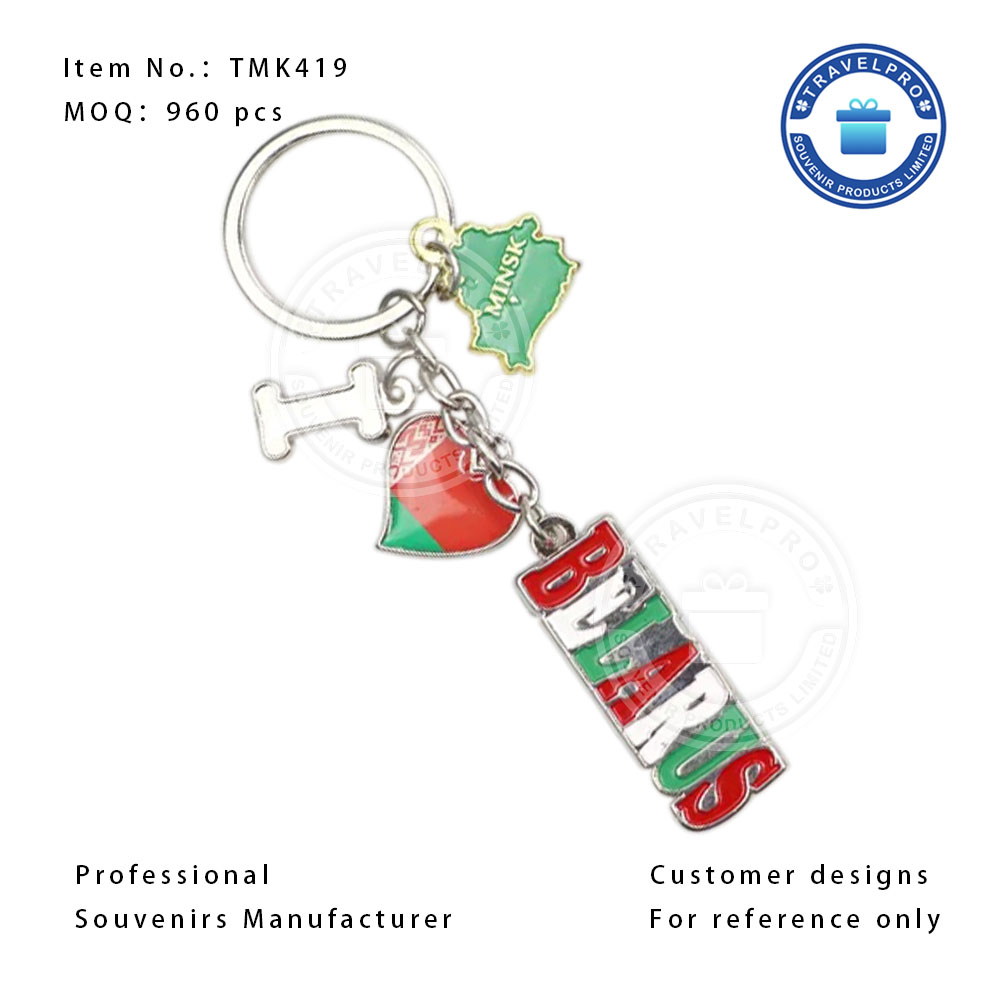
Modern branding often features intricate digital elements. We use direct UV or offset printing applied to a flat metal surface to capture these details. Technicians then seal the artwork underneath a clear polyurethane dome. This epoxy acts as a highly protective transparent shield.
You must choose a printed metal keychain for exact brand guidelines. Strict CMYK color matching requires modern printing. Photographic elements demand this process entirely.
Common Mistake: Do not assume all epoxy is identical. Ask your supplier for UV-resistant polyurethane. Cheaper resins crack and discolor quickly in sunlight.
These processes manipulate the base material directly. You alter the metal itself rather than adding external color. This approach yields a timeless, rugged aesthetic.
Laser engraving removes the top layer of metal instantly. It strips away the outer plating to reveal the core material beneath. This method is fast, highly precise, and extremely durable. We consider it ideal for subtle, monochromatic corporate branding. Lasers can render incredibly tiny text cleanly.
Alternatively, you can utilize custom injection molding. Technicians inject molten zinc alloy into a custom 3D mold. This process creates a die cast keychain from scratch. It works beautifully for bespoke shapes and structural logos. The finished item carries a substantial, weighty feel. Zinc alloy captures three-dimensional curves perfectly.
Standard engraving offers zero color matching. You get the color of the exposed raw metal. Custom casting requires a higher upfront investment. You must pay initial mold fees to machine the steel molds. You also face longer initial lead times. However, once the mold exists, unit costs drop significantly.
Vector realities rule the manufacturing floor. You must provide .AI or .EPS files to your supplier. These formats remain absolutely non-negotiable for enamel and engraving. Raster images like .JPG or .PNG limit you strictly to printed processes. Vectors provide mathematical lines. Machines read these lines to cut metal precisely.
Simplification trade-offs happen constantly during prepress. Be prepared to approve a modified production proof. A complex web logo rarely translates cleanly onto a 1.5-inch metal surface. You often must simplify complex typography. You must remove digital drop shadows completely. Planners convert tiny fonts into bold block letters.
Your choice of base metal plating affects contrast immensely. Gold, nickel, or black dye change how your logo reads. Black dye plating obscures dark enamel colors. Shiny nickel causes bright glare under natural light. This glare often hides shallow laser engraving. Always contrast your plating metal against your primary brand color.
Best Practice: Outline all fonts before sending your files. Missing font files cause production delays. Converting text to vector shapes prevents this issue entirely.
You must match the production process to your specific business goal. Let us examine the best options for different procurement scenarios. Maximizing your return on investment requires strategic alignment.
A printed accessory or soft enamel offers a fantastic balance. They provide immediate visual punch and low unit costs. This exact combination works perfectly for a wholesale souvenir keychain. Tourist shops need high margins and bright colors. These processes deliver both efficiently.
Hard enamel justifies much higher retail price points. Custom casting also elevates perceived value through undeniable tactile quality. Retail buyers gladly pay premiums for heavy, polished metal goods.
If you need fast, low-MOQ corporate gifts, choose blank stock accessories. You can laser engrave blank stock metal quickly. This avoids mold fees entirely. It also guarantees a shipping turnaround in mere days rather than weeks.
Always request a pre-production sample. At a minimum, demand a detailed digital CAD proof. You must verify line thickness and color translation visually. Do this before authorizing any mass run. Catching an error on a digital proof costs nothing. Catching an error after molding costs thousands.
The best process is entirely dependent on your logo's visual traits and your budget realities. Enamel delivers premium texture and classic appeal. Print delivers absolute precision and photographic capability. Bare metal processes deliver rugged longevity and understated elegance.
You must align your artwork files with the physical limits of metalwork. Simple vector designs yield the most predictable results. Complex digital art requires epoxy printing to survive the transition to a physical object.
Stop guessing how your logo will look in metal. Submit your vector artwork today for a free feasibility review. Our engineering team will recommend the exact process. We will ensure it fits your brand guidelines perfectly.
A: Laser engraving and hard enamel are the most resistant to daily wear and tear from keys. Laser engraving physically alters the metal, making it permanent. Hard enamel is baked solid and polished flat, preventing scratches and color fading over time.
A: No. Enamel requires solid, distinct colors separated by raised metal lines. Liquid enamel cannot mix to form gradients during production. For gradients or shading, you must use a digital printed process sealed with an epoxy dome.
A: Yes. Laser engraving can often be done on a single unit using blank stock. Conversely, custom die casting and traditional enamel usually require an MOQ of 50 to 100 units. This volume is necessary to absorb the upfront setup and mold machining costs.

