
Views: 0 Author: Site Editor Publish Time: 2026-08-14 Origin: Site


Tourist retail spaces thrive on small impulse purchases. Eye-catching merchandise placed near the register drives crucial revenue for souvenir shops and visitor centers. Among these items, keychains remain undisputed high-margin, high-volume champions. Visitors consistently seek affordable, portable mementos to commemorate their travels.
Shop owners often struggle to balance manufacturing unit costs against perceived consumer value. Poor choices lead directly to unsold dead stock gathering dust on displays. Worse, cheap breakages compromise brand reputation. When souvenirs break on the flight home, you guarantee negative visitor reviews and damage future sales.
You need a clear, objective framework to evaluate material types and manufacturing partners. We will explore how to align specific designs seamlessly into your target demographic. Read on to master these crucial sourcing decisions before you commit capital to large wholesale inventory orders.
Aligning material choice (metal, PVC, acrylic) with your specific tourist demographic dictates sell-through rates.
Understanding exact custom souvenir keychain specifications upfront prevents unexpected mold fees and shipping delays.
A reliable custom souvenir keychain supplier is evaluated by their prototyping process, compliance transparency, and realistic minimum order quantities (MOQs).
High perceived value doesn't always require the highest unit cost; packaging (like custom backing cards) drives retail pricing power.
Display racks have finite space. You must optimize dimensions carefully to maximize revenue per square foot. Successful custom souvenir keychain specifications typically cap the primary charm size under three inches. Larger pieces crowd retail displays and tangle easily on densely packed spinner racks. Furthermore, heavy metal designs often deter international travelers. These tourists worry constantly about strict luggage weight limits. Compact, lightweight items remove this purchase friction immediately.
Hardware choices directly impact both product lifespan and perceived value. You must evaluate various attachment styles based on your target retail price.
Split Rings: These offer the most cost-effective solution. They secure keys tightly but lack premium visual appeal.
Lobster Clasps: This hardware elevates the entire product. Consumers easily attach them directly to backpacks, purses, or luggage zippers. They command a higher retail price.
Swivel Chains: These provide an excellent middle ground. They prevent the main charm from tangling or facing backward on a display hook.
Retail packaging integration saves significant internal labor costs. Ask your manufacturer to supply pre-assembled retail backing cards. These customized cardboard inserts provide valuable marketing real estate. You can print brand stories, scannable barcodes, and retail pricing directly onto the card. Your staff avoids manually stickering hundreds of individual items in the backroom. The product arrives entirely ready for the sales floor.
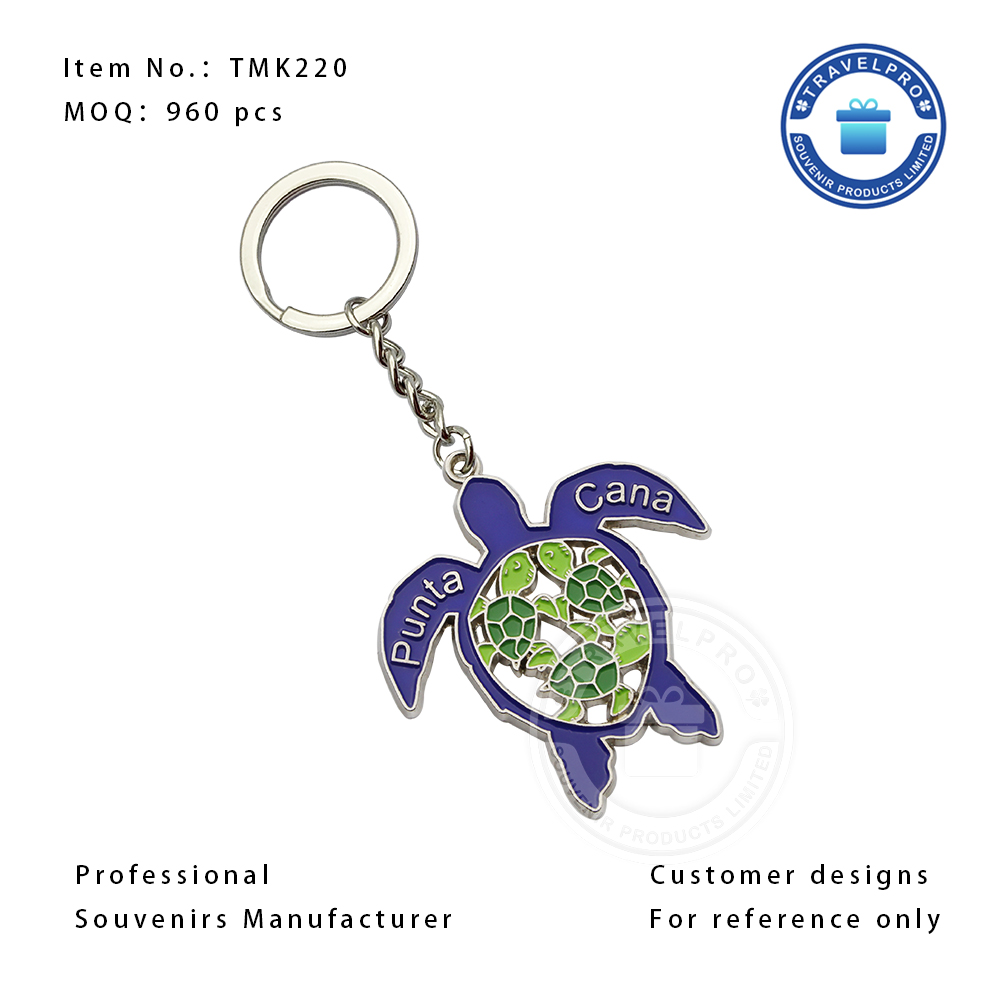
Creating a highly profitable custom souvenir keychain begins by analyzing your core visitor demographic. Different materials evoke different emotional responses and justify entirely different price points.
Soft 3D PVC appeals strongly to younger audiences. Theme parks, zoos, and family-centric attractions sell immense volumes of PVC designs. The material is highly durable, vibrant, and completely drop-resistant. Children can attach them to school backpacks without fear of shattering. However, the manufacturing process requires individual molds per color block. Highly complex color gradients do not translate well to soft PVC.
Die-struck hard enamel or stamped metal suits a more sophisticated buyer. Museums, national parks, and heritage sites rely heavily on this material. Metal offers high perceived retail value. It allows you to establish premium pricing tiers. The drawbacks include heavier shipping weights and higher overall transit costs. Additionally, polished metal surfaces remain susceptible to scratching if the manufacturer skips applying a protective clear epoxy coat.
Printed clear acrylic caters perfectly to art galleries, pop-culture shops, and fast-trend retail environments. The production process involves printing high-resolution digital files directly onto acrylic sheets, then laser-cutting the shapes. It offers rapid production times and exact photographic replication. Acrylic presents the lowest barrier to entry. The primary downside is fragility. Thin acrylic can crack under heavy impact or extreme bending.
Material Type | Ideal Retail Location | Primary Advantages | Potential Drawbacks |
|---|---|---|---|
3D Soft PVC | Zoos, Theme Parks, Aquariums | Drop-resistant, vivid colors, kid-friendly | Requires distinct molds per color block |
Hard Enamel / Metal | Museums, National Parks, Heritage Sites | Premium feel, justifies higher retail price | Heavier shipping weight, prone to scratching |
Printed Acrylic | Art Galleries, Pop-Culture Shops | Fast production, photo-realistic prints | Can chip or crack under heavy pressure |
Developing a reliable tourist shops custom souvenir keychain strategy requires strict financial discipline. You must break down upfront tooling costs against long-term reorder pricing. When does a fully bespoke custom custom souvenir keychain mold truly break even? Metal and PVC designs require physical molds. These molds carry a one-time setup fee. If you order 100 units, the mold fee heavily inflates the per-unit cost. If you project selling 2,000 units over a tourist season, the mold fee amortizes down to pennies per unit.
Inventory risk management relies on understanding Minimum Order Quantities (MOQs). High MOQs trap your working capital in untested merchandise. To mitigate this, test new visual designs using lower MOQs first. Accept a slightly higher unit cost for the initial trial run. Once the design proves popular at the cash register, commit to high-volume price breaks for the mid-season restock.
Protecting your profit margins requires accurate landed cost calculations. Never price your souvenirs based purely on the factory quote. You must ensure a minimum 60-70% gross margin at retail. Use this standard calculation sequence to find your true cost:
Request the base per-unit manufacturing cost from the factory.
Add the prorated mold fee (divide the total mold fee by your order quantity).
Add total freight costs (air or sea shipping divided by the unit count).
Add expected customs duties and import taxes.
Add internal labor costs for unboxing and visual merchandising.
Finding a trustworthy custom souvenir keychain supplier demands rigorous vetting. You must establish clear expectations before transferring any funds.
Never skip the Pre-Production Sample (PPS). Many buyers approve digital proofs and rush straight into bulk production. This mistake often results in thousands of unusable items. Digital proofs look completely different from physical metal. When reviewing a digital proof, scrutinize the Pantone color matching codes carefully. Verify the bleed lines and check the outer cut paths. Insist on receiving a physical prototype or a high-resolution video of the first manufactured piece before authorizing the full run.
Compliance and safety regulations protect your business from liability. You must verify alloy compositions. Ensure all metal components remain strictly lead-free. For soft PVC orders, demand phthalate-free materials. Family-oriented tourist destinations face immense scrutiny regarding child safety. A reputable factory willingly provides recent material safety testing certificates.
Assess supplier reliability through their daily communication habits. Pay attention to how they handle shipping terminology. Clarify whether quotes use FOB (Free on Board) or DDP (Delivered Duty Paid) terms. DDP significantly reduces your logistical headaches. Finally, discuss realistic peak-season turnaround times. A factory promising one-week delivery during peak holiday manufacturing months is likely overpromising and will ultimately delay your seasonal launch.
Avoiding dead stock requires strategic ordering. Many buyers make the mistake of ordering 500 units of a single untested design just to hit a lucrative price break. You face significantly less risk by ordering five different design variations at 100 units each. This diverse assortment lets your actual customers dictate the winning design. You can double down on the bestselling variant during your next reorder cycle.
Visual merchandising dictates impulse purchase success. Position your display directly near the Point of Sale (POS). Customers standing in line need something bright and engaging to look at. Countertop spinners work perfectly for high-traffic registers because they invite physical interaction. Wall-mounted slatwalls perform better for extensive collections where visitors want to step back and view twenty different localized designs simultaneously. Ensure the lighting highlights the metal finishes or acrylic prints.
Quality control upon delivery protects your margins. Do not blindly place new stock onto the retail floor. Establish strict Standard Operating Procedures (SOPs) for the receiving dock. Have your staff check a randomized sample of the first 5% of the bulk order. Test the clasp tension manually. Inspect the enamel fill consistency under bright lights to catch air bubbles. Check the print alignment on backing cards. Catching these defects early allows you to negotiate partial refunds or replacements before the tourists arrive.
The right merchandise strategy requires calculating a delicate balance between your specific audience's expectations, strict unit economics, and long-term material durability. Shoppers buy souvenirs to capture a memory, but they demand a product capable of surviving the journey home. Metal, PVC, and acrylic each serve distinct retail environments and demographic preferences.
Take immediate action by auditing your current top-selling SKUs. Identify which material styles historically generate your highest margins. Next, finalize your upcoming seasonal artwork in clean vector formats. Finally, request fully itemized quotes from three shortlisted suppliers based strictly on the detailed specifications we explored. Proactive planning guarantees your retail racks remain profitable throughout the entire peak tourist season.
A: Expect typically 3-4 weeks for actual production, plus an additional 1-2 weeks for air freight delivery. Complex 3D molds or large-scale enamel orders may add extra days. Always build a five-week buffer into your seasonal purchasing calendar.
A: Yes. Standard factory quotes usually cover up to four distinct colors. Adding more colors increases the individual unit cost and raises tooling complexity. Simplify your artwork to maximize profit margins.
A: Vector files (.AI, .EPS, or .SVG) are absolutely mandatory. Vector graphics ensure clean, precise molds and accurate printing boundaries. Standard JPEG or PNG files blur during the tooling process, resulting in poor physical edges.
A: Usually no. Minimum order quantities tie directly to the specific physical mold creation. However, some suppliers allow split orders specifically for flat acrylic designs, where laser cutting requires no expensive physical molding process.

