
Views: 0 Author: Site Editor Publish Time: 2026-08-24 Origin: Site


Purchasing or manufacturing souvenir spoons requires a careful balancing act. Buyers must align historical collectible standards against modern retail logistics. Sourcing inventory without a precise measurement strategy disrupts everything in a gift shop. Picking an arbitrary size throws off your visual merchandising efforts completely. It misaligns collector expectations and often unnecessarily inflates custom tooling costs. You might end up paying more for shipping and packaging than your retail margins allow. To maximize return on destination merchandise, buyers must evaluate sizing carefully. We will explore display compatibility, historical collector precedents, and core unit economics. You will learn exactly how to choose dimensions ensuring profitable, appealing products for your shoppers.
Focusing on how souvenir spoon length influences your bottom line is crucial. Product dimensions directly dictate your packaging requirements. An extra inch on a handle often forces a shift from standard bags to custom boxes. This size increase heavily impacts shipping weights. Retailers pay premium rates for bulky freight arriving from overseas manufacturers. Expanding cubic volume reduces the number of units fitting inside a standard shipping container. You also lose valuable shelf-space allocation. Every square inch in a tourist destination matters immensely for overall revenue. You want a high volume of items displayed beautifully.
You need a product feeling substantial to the tourist. Shoppers want to hold something feeling valuable and well-crafted. However, it must remain lightweight enough to maintain high profit margins per square foot. High-rent retail locations demand dense merchandise displays. Large, unwieldy items take up too much vertical space. Finding the perfect equilibrium ensures fast inventory turnover. You maximize profit when products fit standard retail fixtures perfectly.
Implementing oversized pieces introduces hidden costs constantly. Retailers suddenly require custom backing cards. Standard poly-bags no longer fit the inventory. You end up wasting budget on oversized cardboard displays. A small dimension change cascades through your entire supply chain. Store employees spend more time arranging bulky items. Fragile, oversized packaging frequently bends during customer handling. Keeping pieces compact eliminates these unnecessary operational hurdles entirely.
Two primary categories dominate the global market. The demitasse standard measures between 4.0 and 4.75 inches. This size represents the historical baseline for global collectors. It perfectly balances intricate finial detailing against compact storage needs. Serious hobbyists can store hundreds of these pieces easily. Antique wall cabinets feature specialized slots designed exactly for demitasse proportions. You will find serious numismatists default almost exclusively to these dimensions. They reject larger items simply because they do not fit traditional display cases.
The standard teaspoon measures between 5.5 and 6.0 inches. You should use larger sizes for premium gift shops. They offer a higher perceived value for casual tourists. Some buyers prefer functional items over purely decorative pieces. A larger bowl allows practical daily use. Premium boutiques often stock these heavier options for luxury gifting. We see high-end resorts leaning toward standard teaspoons for their signature collections.
We must compare historical collector expectations against modern tourist purchasing behaviors. Casual shoppers want a heavy, usable keepsake. Hardcore collectors demand strict adherence to traditional sizing. You must analyze your store traffic carefully. Souvenir shops near historical monuments attract serious hobbyists. Gift shops in tropical resorts attract casual vacationers. Choosing the correct collectible spoon size dictates your core demographic appeal.
Table: Spoon Size Category Comparison
| Category | Length Range | Primary Audience | Display Compatibility |
|---|---|---|---|
| Demitasse | 4.0" - 4.75" | Traditional Collectors | Universal slotted racks |
| Standard Teaspoon | 5.5" - 6.0" | Casual Tourists | Peg hooks or custom boxes |
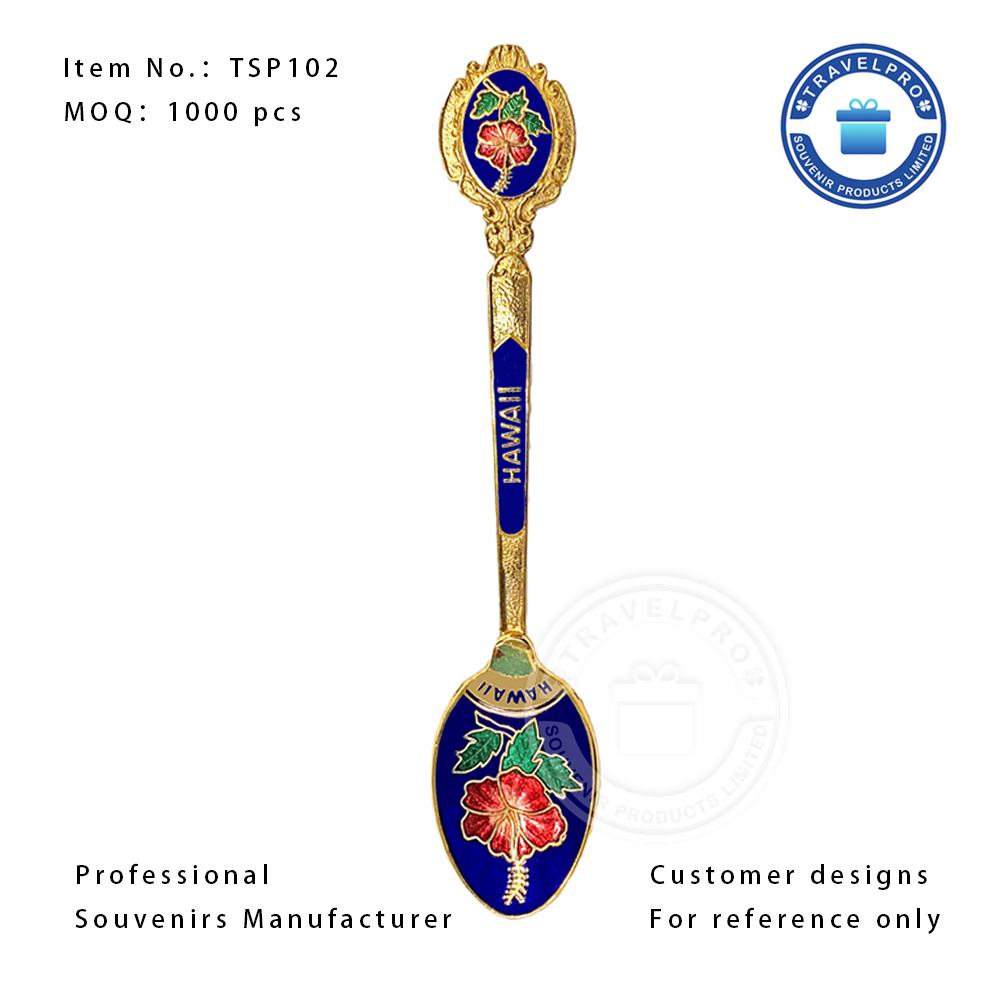
Creating a quality metal souvenir spoon requires precise material planning. Zinc alloy, pewter, and silver-plated brass perform differently across various lengths. A long piece feels cheap if manufacturers cast it too thinly. You get a much better tactile response from a shorter, densely cast piece. Weight interplay directly influences customer quality perception. Consumers instantly recognize flimsy metals. They associate substantial weight with high manufacturing standards. You must balance thickness against overall length.
Stem length dictates your available canvas for custom engraving. You need enough flat space for city names or GPS coordinates. We calculate an optimal ratio between the bowl, stem, and finial. A massive bowl overpowers a tiny crest. A long stem requires a proportionately larger finial for visual balance. This feature-to-outcome relationship dictates your final design blueprint. Intricate 3D crests require sturdy stems underneath them.
Structural integrity remains a major risk factor for longer spoons. Pure pewter represents a soft metal prone to bending. Longer stems easily warp during rough transit. Customers frequently return bent items. We see high defect rates when buyers ignore metallurgical limits. Shorter, thicker stems actively reduce your manufacturing defect rates. A compact design survives international shipping much better. You protect your inventory investment by keeping designs structurally sound.
Standard commercial display racks follow specific engineering guidelines for drop-lengths. Implementing a standardized retail spoon display increases unit velocity significantly. A curated collection looks professional. A chaotic mixture of sizes confuses buyers. Visual clutter causes decision paralysis. Customers simply walk away when fixtures look disorganized. You want your merchandise standing out cleanly. Retailers must audit their physical space before ordering inventory.
Merchandising guidelines dictate exact spacing protocols. Store owners must arrange items systematically. You ensure shoppers can remove products easily. Knocking adjacent items off the rack frustrates everyone. Proper spatial planning eliminates these retail friction points.
A standardized approach drives high conversion rates. Shoppers naturally gravitate toward symmetrical arrangements. You highlight detailed crest designs better when items align perfectly. A well-planned fixture acts as a silent salesperson. It guides the customer's eye across your entire product range. You increase multi-unit purchases by presenting a cohesive collection.
You must evaluate a B2B manufacturer's catalog carefully. Look for clear distinctions between standard blanks and fully custom die-casting. A reliable vendor clearly explains their production capabilities. You need partners understanding historical sizing standards. Many factories offer standard tooling options saving you upfront money. You can utilize existing handle blanks while customizing only the top crest.
A trusted vendor offers total cost transparency regarding mold fees. Expanding a destination gift spoon by just one inch changes everything. It requires a significantly larger steel block for CNC machining. This geometry increase pushes initial setup costs higher by 15-20 percent. You pay for extra machining time and raw materials. Cost transparency prevents budget overruns early in the process. Ask direct questions about dimension-related price jumps.
Next-step actions protect your investment entirely. You must hold physical items before approving digital proofs. Photos rarely convey accurate weight or structural integrity. A physical audit ensures the final product meets your exact specifications. You avoid costly remakes by validating samples early.
Our assessment proves 4.25 to 4.75 inches remains the safest choice. This specific range acts as the most cost-effective standard for retail logistics. It satisfies historical collector expectations perfectly. You minimize shipping weight while maximizing shelf density. You avoid excessive mold fees during the manufacturing process. A compact design guarantees stronger structural integrity across all metal types.
We advise buyers to audit their current display constraints immediately. Evaluate your target audience deeply before finalizing any design specs. Casual tourists tolerate larger pieces. Serious collectors demand traditional demitasse proportions. You align your product strategy by knowing your core shopper.
Take action today by measuring your existing top-sellers. Document their exact dimensions and packaging requirements. Contact a trusted manufacturing partner to request a sizing and material consultation. You can build a highly profitable souvenir collection using precise measurement strategies.
A: The historical standard relies heavily on the demitasse spoon profile. These pieces typically range from 4 to 4.5 inches. Dedicated collectors design their wooden display cabinets specifically around this compact measurement.
A: Yes. Tooling geometry dictates price. Longer pieces require larger steel blocks for CNC machining the mold. This extra material and machining time directly increases your upfront manufacturing setup costs.
A: You should apply standard spacing logic. Take the total spoon length and add 1.5 inches of vertical clearance. This gap allows easy product removal without knocking adjacent items off the display rack.
A: While standard teaspoons work well for general tourist gifts, you face a caveat. Dedicated hobbyists prefer traditional collectible sizes. Oversized pieces often fail to fit their existing wall-mounted cabinets properly.

