
Views: 0 Author: Site Editor Publish Time: 2026-08-25 Origin: Site


For importers, a Request for Quotation (RFQ) is not just a simple pricing inquiry. It functions as a legally foundational document. It dictates supply chain predictability. It also guarantees long-term product success. Ambiguous requests frequently yield inaccurate pricing. They also invite bait-and-switch material substitutions. Worse, vague details trigger severe customs compliance failures upon importation. We see buyers lose thousands because they failed to define their expectations clearly. This article details how a highly structured custom souvenir RFQ forces suppliers to provide binding, comparable data. You will learn to explicitly separate unit manufacturing costs from hidden fees. We will explore how to mandate precise details to eliminate vendor assumptions. By following this guide, you can accurately calculate landed costs. You will easily select reliable manufacturing partners and confidently protect your brand reputation.
Sending an undefined inquiry for a bulk gift order exposes your business to immense financial danger. Opportunistic suppliers often exploit vague parameters. They quote unrealistically low prices simply to win your business. Once you engage them, the true costs quickly emerge.
Failing to address these three areas hands control entirely over to the factory. You must lock down these variables early. A rigorous request process eliminates ambiguity and protects your profit margins.
A professional request signals buyer legitimacy. Tier 1 suppliers receive countless vague inquiries daily. They often ignore anonymous, incomplete emails. You must establish your company context immediately. Briefly introduce your brand, your market presence, and your historical purchasing volume. This context attracts serious factories.
You also need to protect your intellectual property. Mandate a Non-Disclosure Agreement (NDA) before sharing proprietary designs. Serious manufacturers gladly sign NDAs. If a factory refuses, you should disqualify them immediately.
Next, request tiered pricing based on order volumes. Never ask for a single quantity quote. You need to evaluate the supplier's scalability. Requesting tiered pricing reveals their volume discount curves. For example, ask them to quote three different tiers:
By comparing these tiers, you see how efficiently they scale production. A factory lacking economies of scale will show little price difference between 5,000 and 50,000 units.
Finally, clearly define target timelines and penalties. Vague delivery expectations ruin marketing campaigns. Establish exact milestone dates in your document. You need baseline expectations for delay penalties.
State clearly that late shipments incur a specific penalty, such as a 2% invoice deduction per week of delay. This language filters out unreliable vendors quickly.
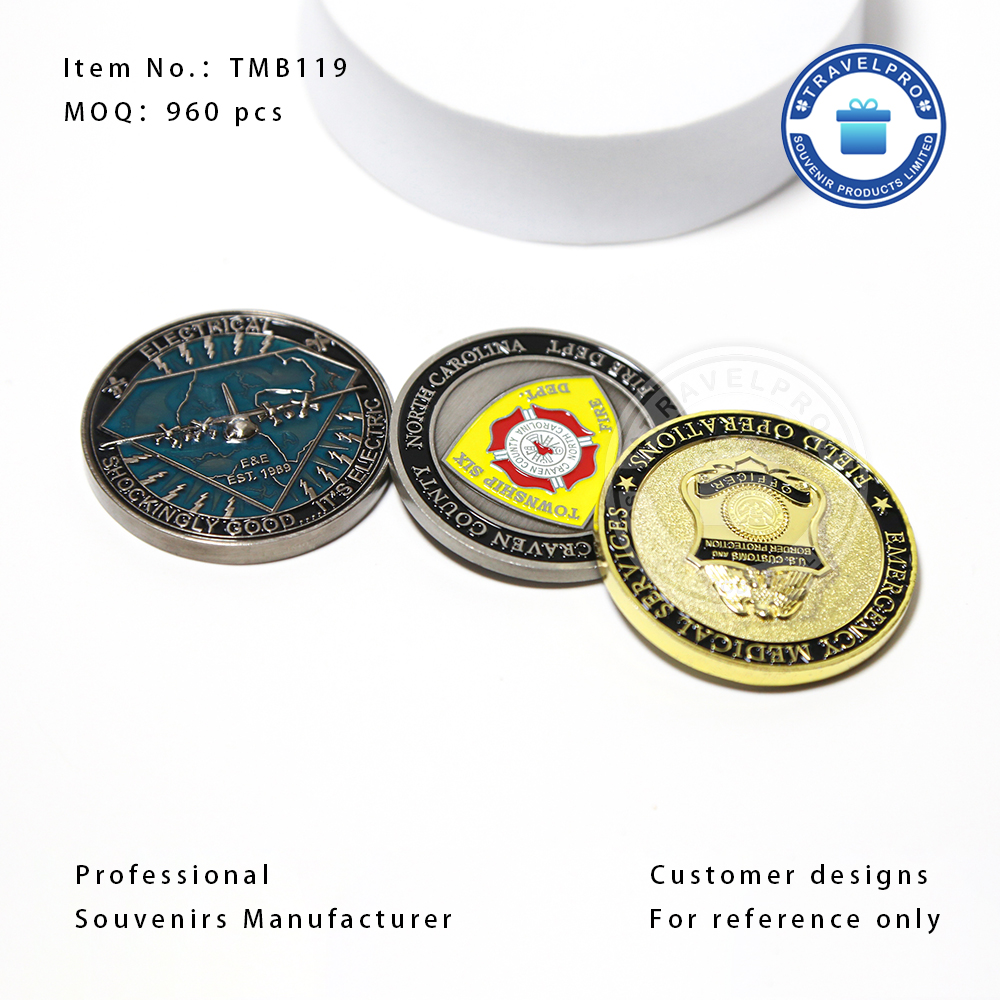
Providing strict souvenir specifications is your strongest defense against quality fade. Do not rely on reference photos downloaded from the internet. Photos leave too much room for interpretation.
You must provide professional design and engineering files. Supply 2D vector artworks (.AI or .EPS formats) for precise logo placement. For molded items, provide 3D CAD files (.STP or .IGS formats). You also need to state strict dimensional tolerances. If a keychain must be exactly 40mm wide, specify an acceptable tolerance of +/- 0.5mm. Without tolerances, factories will shrink dimensions slightly to save raw material.
Stating generic terms like "metal" or "plastic" is a critical failure. Importers must mandate exact materials and finishes. There are dozens of plastic polymers and metal alloys. Each carries different costs and durability profiles. You must define the exact alloy. You must also specify the required finish.
| Component Category | Vague Description (Avoid) | Precise Specification (Use) |
|---|---|---|
| Metal Base | Heavy metal | Zinc Alloy #3, die-cast, 45g weight |
| Plastic Housing | Hard plastic | High-impact ABS polymer, injection molded |
| Surface Plating | Gold color | Real 18K gold electroplating, 0.05 microns thick |
| Texture/Finish | Shiny | High-polish mirror finish, clear epoxy dome coating |
Color matching standards are equally vital. Never use subjective descriptions like "navy blue" or "cherry red". One factory's navy blue is another's royal blue. You must mandate adherence to specific Pantone Matching System (PMS) color codes. State clearly that the final product must match the physical Pantone swatch under standard daylight conditions. This eliminates subjective arguments during the quality control phase.
Many importers focus entirely on the product itself. They forget about customs and packaging. This oversight causes disastrous delays at the border. You must integrate regulatory requirements directly into your inquiry document.
Country of Origin (COO) markings are legally required by most authorities, including U.S. Customs and Border Protection (CBP). You must specify exactly where and how the "Made in [Country]" mark appears. Do not let the factory decide. Specify whether it should be permanently engraved on the product back. Alternatively, state if a permanent adhesive sticker on the retail packaging is acceptable. Incorrect COO markings lead to severe fines and port confiscations.
Material compliance and testing represent another major hurdle. Demand proof of compliance for regulated materials upfront. Painted souvenirs imported into the US or EU face strict limits on heavy metals. You must explicitly require compliance with lead and cadmium regulations. If you import drinkware or kitchen accessories, mandate FDA or LFGB compliance. Ask suppliers to submit previous third-party lab testing reports alongside their pricing.
Packaging specifications require granular detail. Differentiate clearly between retail presentation packaging and transit packaging. For retail boxes, specify the exact cardstock weight (e.g., 300gsm). Detail the necessary SKU barcodes and mandated warning labels (like suffocation warnings for polybags). For master transit cartons, demand double-corrugated cardboard. Require them to meet standard drop-test protocols. Beautiful products often arrive shattered because the buyer failed to specify robust master carton requirements.
Receiving responses is only half the battle. Evaluating a custom souvenir quotation correctly requires analytical rigor. You need to look far past the lowest unit price.
First, use the returned data to spot the true souvenir manufacturer versus a trading company middleman. Middlemen often hide their status. Request factory audit reports and ISO 9001 certifications. Direct manufacturers proudly share these documents in their name. Trading companies usually blur the factory details or provide certificates under different entity names. Direct manufacturers also tend to offer more precise production lead times, whereas trading companies offer vague estimates.
You must compare quotes on an apples-to-apples basis. Different suppliers format their responses differently. You need an internally standardized scoring matrix to normalize their data.
| Evaluation Metric | Weighting | Ideal Vendor Submission | Red Flag Submission |
|---|---|---|---|
| Total Landed Cost | 40% | Itemized unit, tooling, and DDP freight | EXW only, vague "shipping extra" notes |
| Material Compliance | 25% | Matches exact specs, provides lab reports | Suggests cheaper, unspecified alternatives |
| Production Lead Time | 20% | Detailed milestone schedule provided | "About 20-30 days" with no guarantees |
| Defect Policy | 15% | Agrees to replace defects on next order | Refuses liability post-shipment |
Watch out for the "Too Good to Be True" red flag. Extreme low-ball quotes carry massive risk. If one factory quotes 40% below the median average of five other factories, they are likely cutting corners. They might plan material downgrades. They might exploit illegal labor practices. You must ask them to specify the exact assumptions they made to reach that price. Often, they will admit they quoted a thinner metal or excluded the packaging.
Once you filter the responses, execute your next-step actions. Move your top two shortlisted vendors to the paid sampling phase. Never sign a formal Manufacturing Agreement or wire a mass production deposit based solely on a PDF document. Prototyping validates their engineering claims and confirms their communication skills during friction.
Building a comprehensive inquiry document requires upfront effort. However, this investment of time pays massive dividends in quality assurance and risk mitigation. It forces suppliers to play by your rules. It strips away the ambiguity that leads to budget overruns. You gain complete visibility into tooling fees, material grades, and logistical obligations.
Purchasing teams should build standard, modular templates. You can quickly adapt these templates for future sourcing needs. Do not start from scratch every time. Consistent documentation leads to consistent manufacturing results.
To accelerate your sourcing success, start standardizing your procurement process today. We encourage you to download our standardized templates, consult with our dedicated sourcing experts, or utilize our advanced procurement software. Taking these steps will streamline your vendor evaluation process and secure your supply chain.
A: Including a target price anchors expectations and saves time if your budget is strictly fixed. However, it prevents you from discovering a lower market rate. Opportunistic factories will simply quote exactly at your target, even if their actual costs are much lower. Best practice dictates withholding your target price initially to gauge true market rates.
A: You must explicitly negotiate tooling ownership in your request document. If you pay the setup fee but fail to claim ownership in writing, the manufacturer will default to retaining ownership. Always stipulate that paying the mold fee grants you exclusive ownership and the right to transfer the mold later.
A: Set realistic expectations. A thorough manufacturer needs 3 to 5 business days to evaluate custom engineering files and secure accurate material costs. Any factory returning a quote under 24 hours is likely providing an automated, inaccurate estimate based on generic assumptions.
A: This depends on your logistical maturity. FOB (Free on Board) is best if you have a reliable freight forwarder, giving you control over ocean transit. DDP (Delivered Duty Paid) is safer for beginners, as the factory handles all freight and import customs clearances directly to your warehouse.

