
Views: 0 Author: Site Editor Publish Time: 2026-08-01 Origin: Site


Stocking poor-quality merchandise creates massive business risks for souvenir retailers. Gift shop managers face rising return rates when inventory fails. A damaged brand reputation quickly follows. Store owners must protect their inventory investments rigorously. Poorly made souvenirs reflect badly on the entire destination. Conversely, premium finishes actively drive impulse purchases at checkout. A high-quality foil sticker souvenir magnet delivers massive value to your catalog. It maintains a compact footprint while generating exceptionally strong profit margins. Shoppers naturally perceive these shiny items as premium keepsakes. However, not all manufacturing processes deliver durable results. We approach this procurement challenge skeptically. This guide provides a highly pragmatic framework. You can use it to evaluate suppliers thoroughly. We will teach you how to verify material claims definitively. You will discover actionable ways to guarantee a profitable, scalable inventory rollout.
Buyers often focus only on the surface design. This oversight leads to disastrous bulk purchases of defective products. Magnets can warp easily in humid climates. They may also lose their magnetic pull over time. You must understand the structural layers completely to make informed sourcing decisions.
Industry standards dictate specific thicknesses for reliable performance. You should look for magnetic sheets measuring between 0.5mm and 1mm. Thinner materials simply lack adequate grip on metal surfaces. Full-coverage flexible magnets spread the gripping force evenly across the back. They prevent the item from sliding down a refrigerator door. Small hard magnets offer intense concentrated strength. However, they require careful placement during manufacturing. Manufacturers must glue them securely to prevent detachment. Flexible backings generally provide safer, more consistent weight-bearing capacity for retail environments.
The core acts as the skeleton of your product. A robust metal base fridge magnet provides vastly superior rigidity. You should avoid compressed cardboard cores entirely. Cardboard absorbs ambient moisture rapidly. It swells up and destroys the surface design. Cheap plastic cores often warp under direct sunlight. Metal cores resist environmental changes effectively. They keep the foil surface perfectly flat at all times. This flatness ensures maximum light reflection for the metallic finish.
A commercial-grade item relies on precise bonding techniques. Manufacturers must fuse multiple distinct layers seamlessly. Flaws in any single layer compromise the whole unit.
You must ensure suppliers use industrial-strength bonding agents between every level. A weak adhesive layer causes immediate product failure.
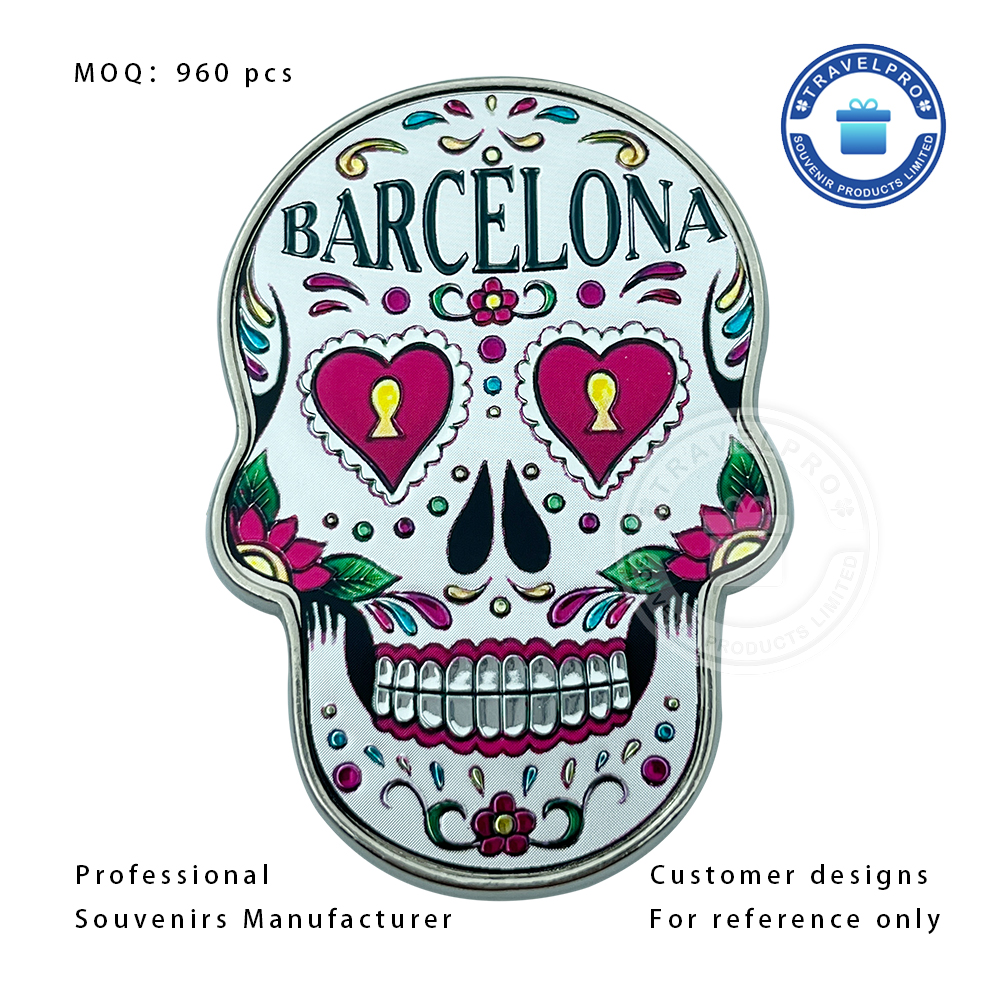
You need clear dimensions to evaluate supplier claims accurately. Visual quality and long-term durability require aggressive testing before you place a large order.
Foil peeling ruins merchandise quickly. Humid tourist destinations pose a severe threat to cheap adhesives. Moisture penetrates unsealed edges easily. It breaks down the glue holding the foil layer. We advise buyers to request rigorous peel tests on physical samples. You should score the surface lightly with a blade. Apply strong adhesive tape over the cut. Pull the tape away sharply. The foil must remain firmly attached to the core. Additionally, inspect the edge-wrapping techniques. A quality manufacturer wraps the topcoat around the sides completely. This technique creates a vital waterproof seal.
Harsh retail lighting degrades cheap inks rapidly. Window displays pose an even greater fading risk. You must demand UV-cured inks for your merchandise. A reliable printed souvenir magnet must survive long-term exposure. UV inks bond physically to the substrate during curing. They resist fading significantly better than solvent-based alternatives. Furthermore, transferring local landmark photography requires extreme color accuracy. You must insist on exact CMYK color matching. Foil surfaces reflect light uniquely. This reflection can shift perceived colors dramatically. Professional suppliers adjust their CMYK profiles specifically for metallic substrates.
Moving from a digital proof to mass production involves significant risks. You must consider the physical implementation carefully to avoid costly delays.
Foil materials present unique physical challenges during manufacturing. Intricate shapes often cause the foil to tear. Sharp internal corners create severe stress points. You must design shapes accommodating these physical limitations. Smooth curves yield much better results than jagged edges. Establish strict criteria for acceptable edge alignment tolerances. The die-cut blade must align perfectly with the printed border. A misalignment of just one millimeter looks highly unprofessional. Always request a physical prototype before approving full production runs.
Minimum Order Quantities (MOQs) dictate your initial financial investment. A standard custom foil magnet usually requires higher MOQs than flat-printed options. Custom tooling for unique shapes increases factory setup costs. Supply chain timelines demand careful logistical planning. You must account for proofing delays and tooling creation.
| Production Phase | Estimated Timeline | Key Buyer Action |
|---|---|---|
| Digital Proofing | 3 to 5 Days | Check CMYK values and edge bleeds meticulously. |
| Tooling and Molds | 7 to 10 Days | Approve the physical prototype before proceeding. |
| Mass Production | 15 to 25 Days | Request progress photos from the factory floor. |
| Freight Shipping | 30 to 45 Days | Track customs clearance documents closely. |
Your procurement strategy must support sustainable retail operations. Success depends entirely on balancing premium features against manufacturing expenses.
Hidden costs destroy profit margins quietly. You must calculate the total landed cost accurately before setting retail prices. Initial quotes rarely include custom tooling fees. Heavy metal bases increase shipping weights dramatically. Higher shipping weights inflate your freight invoices rapidly. Custom retail packaging also adds to the baseline expense. A successful wholesale tourist magnet program accounts for every single penny. Ask suppliers to quote Delivered Duty Paid (DDP) prices. This approach prevents unexpected customs bills from ruining your budget.
Shoppers gladly pay more for premium textures. Metallic finishes justify a significantly higher retail price point. Flat-printed alternatives simply look cheap by comparison. The shiny surface elevates the product from a basic trinket to a desirable keepsake.
| Product Type | Relative Unit Cost | Perceived Retail Value | Average Margin Target |
|---|---|---|---|
| Standard Flat Print | Low | Basic | 2x Markup |
| Foil Stamped | Medium | Premium | 3x Markup |
| Foil + Metal Base | Medium-High | Luxury Keepsake | 3x to 4x Markup |
You should expect a baseline margin of at least 300 percent on premium items. This margin absorbs the occasional defective unit easily. It also covers your retail overhead comfortably. Do not sacrifice structural quality just to save pennies on unit costs.
You must select a manufacturing partner confidently. Trustworthiness dictates the ultimate success of your procurement cycle. Look for actionable evidence of their production capabilities.
You should evaluate potential partners using strict operational criteria. Use this checklist during your initial negotiations:
A reliable supplier answers these questions quickly and clearly. Hesitation or evasive answers signal severe supply chain risks. You must walk away from manufacturers unwilling to prove their quality standards.
Successful procurement requires diligent verification at every step of the supply chain. You must inspect the structural layers personally. Testing foil adhesion aggressively prevents disastrous customer returns later. Guaranteeing scalable unit economics keeps your retail business profitable year-round. We highly advise buyers to narrow their list to two or three suppliers. Request physical samples from these finalists immediately. Conduct your own scratch tests to verify durability claims. Test the magnet strength on an actual refrigerator door. Upgrading your souvenir offerings creates lasting memories for your customers. They will associate your retail brand with premium quality.
Take action today to secure premium inventory for the upcoming tourist season. Contact our sales team for a detailed consultation. Request a custom quote tailored to your specific profit margins. Ask for a free material sample kit to begin your quality testing immediately.
A: A high-quality foil finish easily lasts five to ten years indoors. Protective clear topcoats shield the metallic layer from minor scratches. However, you should avoid placing them outdoors. Prolonged exposure to rain and extreme temperature fluctuations will degrade the adhesive edge seals quickly.
A: They certainly weigh more than flat plastic alternatives. However, standard shipping handles them easily. You can mitigate higher weight-to-shipping-cost ratios by utilizing bulk ocean freight instead of expensive air express. Always factor this extra weight into your final landed cost calculations.
A: Manufacturers can cut most custom shapes. However, severe die-cutting constraints exist for foil materials. Overly sharp internal corners are highly discouraged. They create severe stress points during the cutting process. The foil often tears or frays at these junctions. Smooth, rounded edges ensure a durable finish.
A: Industry averages vary based on customization levels. Existing factory molds typically require a low MOQ of 100 to 250 units. Custom tooling for unique shapes generally demands 500 to 1,000 units minimum. Higher volumes dramatically reduce your per-unit cost.

