
Views: 0 Author: Site Editor Publish Time: 2026-08-05 Origin: Site


Selecting the right finish for magnetic products isn't just an aesthetic choice; it is a critical mechanical and chemical decision. Buyers often face high failure rates, such as magnets detaching or rapid tarnishing, due to incompatible metal finishes and adhesives. When designers treat decorative coatings as an afterthought, end-users experience poor product longevity. Kitchen refrigerators expose these items to constant ambient moisture. Retail environments subject them to aggressive human handling. We must evaluate every finish against these harsh realities.
This guide breaks down how to evaluate plating options based on durability, magnetic pull-force retention, and assembly reliability so you can specify the right finish for your production run. You will discover the underlying chemistry behind different decorative surfaces. We will explore practical assembly tactics to prevent adhesive failure. You can confidently navigate vendor discussions using these evidence-based strategies. The ideal finish protects your brand reputation and ensures structural integrity over time.
Different base metals react unpredictably to ambient moisture. Human handling introduces acidic skin oils to the metal surface. Kitchen refrigerators represent a surprisingly harsh environment. They combine humidity, temperature fluctuations, and frequent physical impacts. We must evaluate finishes on more than visual appeal alone. They must act as robust chemical barriers. Let us examine the most common options available for a custom metal charm.
Standard nickel plating provides the ultimate baseline for mass production. It remains the industry standard for corrosion resistance. Nickel offers a highly predictable surface energy. Industrial adhesives bond securely to this consistent texture. It also proves highly cost-effective for large manufacturing volumes. However, nickel presents some aesthetic drawbacks. It can look cold or utilitarian. Without secondary polishing steps, nickel lacks the premium shine retail buyers often demand.
High-margin retail lines often require luxurious aesthetics. A gold plated souvenir magnet fits perfectly into upscale commemorative collections. These premium brass and gold finishes command higher retail prices. Yet, they introduce significant manufacturing risks. Pure gold remains inherently soft. It scratches easily during transit or daily use. Manufacturers must enforce stringent quality control over plating thickness. Thin flash-plating often wears away rapidly. Without tight tolerances, the precious metal layer can flake off under physical pressure.
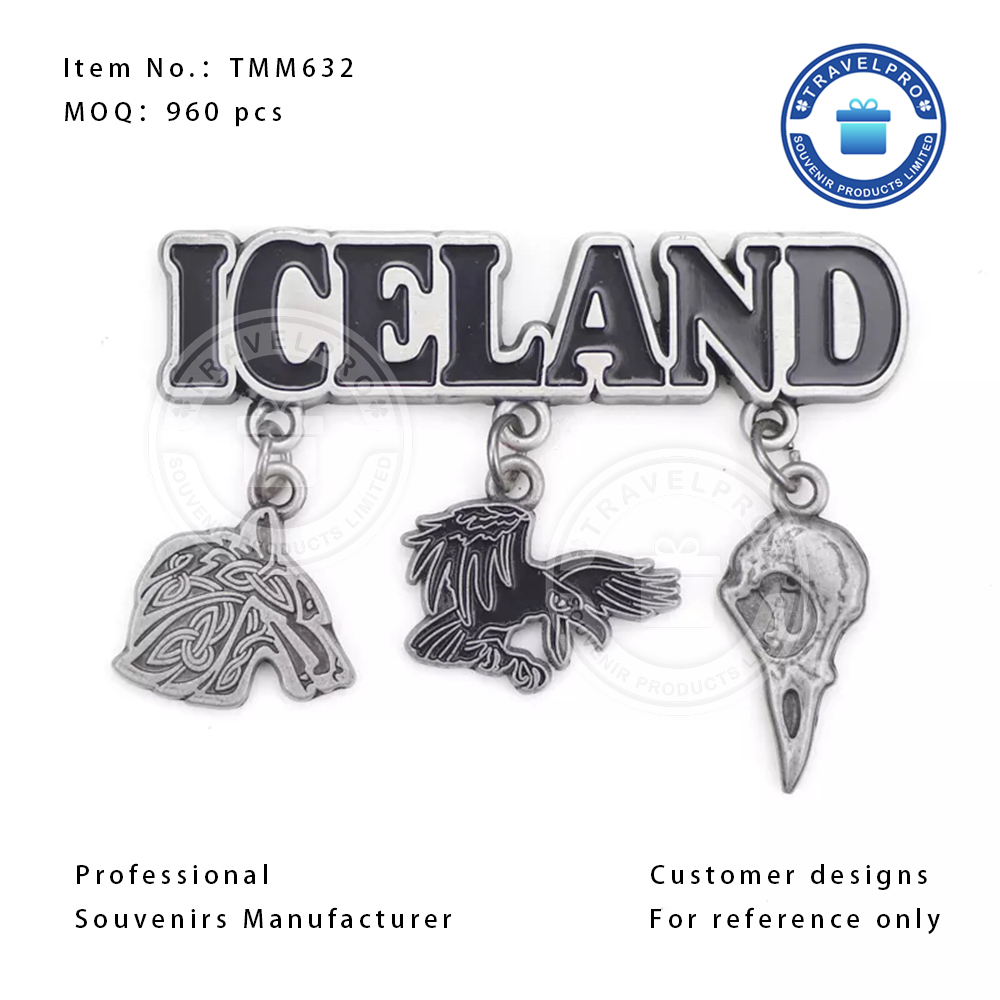
Antique and distressed finishes solve specific design challenges. An antique finish magnet highlights intricate 3D relief beautifully. Recessed shadows provide excellent tactile contrast. Vendors use a chemical oxidation process to darken the metal. They then buff the raised areas to reveal the underlying highlight. Unfortunately, this oxidation process leaves behind chemical residues. If factories fail to neutralize and wash the surface, serious problems arise. Unwashed oxidation severely weakens adhesive bonds. The adhesive sticks to the loose residue rather than the solid metal.
Common Plating Finish Characteristics
| Plating Category | Corrosion Resistance | Adhesive Compatibility | Primary Use Case |
|---|---|---|---|
| Standard Nickel | Excellent (Industry standard) | High (Predictable surface energy) | Budget-friendly retail items |
| Premium Gold & Brass | Moderate (Requires clear-coat) | Medium (Prone to flaking) | High-end commemorative gifts |
| Antique Finishes | Good (If properly sealed) | Low (Requires ultrasonic cleaning) | Intricate 3D relief designs |
Non-magnetic decorative platings create physical distance between the magnet and the target surface. We call this phenomenon the "air gap" principle. Every micron of non-magnetic material acts like an invisible barrier. It pushes the embedded magnet further away from the refrigerator door. The inverse square law governs magnetic pull force. Even microscopic increases in distance cause exponential drops in holding power. Overly thick coatings drastically reduce the functional strength of your final product.
You must establish strict thickness tolerances for your metal charm magnet plating. Acceptable micron-level thicknesses usually fall between 10 and 20 microns. This range provides adequate corrosion protection without sacrificing utility. If the decorative layer exceeds 25 microns, it degrades the pull force significantly. Buyers often mistakenly blame the factory for using cheap magnets. In reality, the excessive plating simply created too large of an air gap. You must specify exact micron limits on your engineering drawings.
Electroplating introduces critical thermal and chemical constraints. Plating the bare charm housing before final assembly works perfectly. Applying secondary plating directly over a pre-assembled neodymium magnet poses severe risks. Standard electroplating baths operate at elevated temperatures. Neodymium magnets typically lose their permanent magnetic field around 80 degrees Celsius. The extreme heat can completely demagnetize the core material. Specialized thermal controls are absolutely necessary during post-assembly plating. Manufacturers must actively cool the baths to prevent irreversible damage.
Securing the magnet represents a massive manufacturing challenge. The most common failure point occurs when the magnet detaches entirely. A smooth souvenir magnet finish inherently resists standard glues. High-gloss platings completely lack surface porosity. They possess very low surface tension. This chemical reality makes it incredibly difficult for standard liquid glues to wet the metal. The adhesive beads up rather than spreading evenly across the surface.
You must select the proper epoxy to ensure structural integrity. Standard craft glues will inevitably fail under sheer stress. We strongly recommend structural two-part epoxies. Rubber-toughened cyanoacrylates also perform exceptionally well. These specialized adhesives flex slightly under pressure. They absorb the sudden shock when a user drops the item. Because high-gloss platings resist bonding, you must physically alter the surface. Mechanical etching provides the perfect solution. Scoring the metal creates microscopic abrasions. These tiny scratches give the epoxy something physical to grip. Applying a specialized chemical primer further improves long-term bonding success.
Design for assembly plays a massive role in product lifespan. You should always advocate for designs utilizing recessed pockets. Flush-mounting a magnet directly onto a flat back is dangerous and unreliable.
Benefits of Designing Recessed Magnet Pockets:
You must align your plating choice with the product's ultimate end-use. High-touch tourist environments demand rugged, scratch-resistant coatings. Nickel and heavy clear-coats survive these harsh conditions best. Conversely, low-touch decorative collections can support delicate premium finishes. Collectors handle these items rarely. Defining these success criteria early prevents costly production mistakes down the line. You can allocate your manufacturing budget much more effectively by matching the finish to the environment.
Compliance and material safety remain strictly non-negotiable. You must highlight the absolute necessity of RoHS and REACH compliance. Many overseas manufacturers still utilize heavy metals to cut corners. You must actively avoid toxic elements in your imported charm platings. Lead and toxic cadmium present severe human health hazards. European and North American customs will confidently confiscate non-compliant shipments. Always request official laboratory compliance certificates before approving any mass production run.
You should demand strict validation protocols from your manufacturing partners. Never assume a factory will perform durability testing voluntarily. Implement these specific requirements:
The right plating aligns beautiful aesthetics with functional durability and reliable assembly. Finding this delicate balance requires careful engineering planning. You must evaluate how ambient moisture, physical handling, and adhesive chemistry interact constantly. Default to standard nickel for budget-conscious reliability. You should utilize antique finishes for intricate 3D designs, but always mandate strict adhesive pull-testing. Reserve soft gold plating for premium tiers requiring strict thickness quality assurance.
Do not leave these crucial variables to chance. Prompt your procurement team to request a physical sample pack from your vendor. Consult a qualified engineering team to test adhesion and pull force on your specific designs. Validating fully assembled prototypes in real-world conditions saves significant time. It ultimately prevents embarrassing product failures and protects your brand reputation.
A: Yes. Non-magnetic plating creates physical distance between the magnet and the surface. This "air gap" reduces the effective pull force exponentially. A decorative coating thicker than 20 microns will significantly degrade holding power. However, the electroplating process itself does not destroy the inherent magnetic field unless the bath temperatures exceed the magnet's thermal limits.
A: Structural two-part epoxies and rubber-toughened cyanoacrylates provide the best results. Standard craft glues lack the sheer strength required for heavy metals. Because polished plating lacks porosity, you must prepare the surface first. Mechanical scoring or sanding creates micro-abrasions. This essential etching gives the tough epoxy a textured surface to grip permanently.
A: Plating primarily peels due to poor substrate cleaning before electroplating. If factory oils, dust, or polishing compounds remain on the base metal, the plating cannot bond. Incompatible thermal expansion rates between the base zinc alloy and the rigid plating layer can also cause spontaneous flaking over time.
A: Yes, antique finishes can be highly susceptible to environmental damage if left unsealed. The chemical oxidation process alters the protective surface chemistry. Factories must apply a secondary clear-coat sealant to preserve the oxidized look. This transparent layer locks the dark recesses in place and prevents ambient moisture from accelerating actual rust.

