
Views: 0 Author: Site Editor Publish Time: 2026-08-27 Origin: Site


For tourism retailers and resort buyers, a destination souvenir keychain is rarely just a basic trinket. You rely on these small, popular items as high-margin, high-turnover inventory staples to drive steady revenue. They keep your cash flow incredibly healthy during peak tourist seasons across the globe.
Choosing the wrong manufacturing material frequently leads to chipped plating, fading colors, or easily broken linkages. Heavy shipping weights from unnecessarily dense metals can quickly erode your hard-earned profit margins before items even hit the shelves. Poorly made products simply sit in display bins and gather dust while damaging your retail brand.
We created this comprehensive guide as a vendor-neutral framework for retail buyers. It helps you accurately evaluate material durability, unit economics, and production scalability for your specific market. You can leverage these exact insights to protect your budget before committing to a massive purchase order.
Material choice directly dictates your tooling costs, minimum order quantities (MOQs), and retail price ceiling.
Zinc alloy and enamel offer the highest perceived value for premium gift shops, while soft PVC dominates high-volume, family-friendly retail.
Clearly defining your destination souvenir keychain specifications upfront protects you from bait-and-switch manufacturing tactics.
Vetting a destination souvenir keychain supplier requires looking past unit price to evaluate compliance (e.g., Prop 65) and defect rates.
Your chosen material dictates the financial success of your retail merchandise strategy. Buyers must weigh production costs against what tourists are willing to pay. This delicate balance determines your overall profitability.
Material selection heavily influences your landed cost. Landed cost includes manufacturing, freight, customs, and packaging fees. You must compare this total expense against the perceived retail value in your physical store. Premium materials cost more upfront. However, they allow you to set a significantly higher price point. Budget materials keep initial costs low. They require high sales volumes to generate meaningful revenue.
Different tourists expect completely different product experiences. You must categorize your core shoppers accurately. Budget buyers typically seek durable, colorful, drop-proof items. Families often purchase multiples for children or friends back home. Conversely, luxury resort guests expect premium weight and refined finishes. They want an elegant keepsake representing their expensive vacation. Misaligning the material to the audience causes inventory stagnation.
Material density plays a massive role in logistics. Heavy metals drastically increase inbound freight costs. Air shipping heavy boxes destroys profit margins quickly. Lightweight materials like acrylic or PVC keep freight expenses manageable. Inventory storage also matters for resort stores destination souvenir keychain buyers. Heavy metal inventory requires reinforced shelving. It also increases handling fatigue for your retail staff.
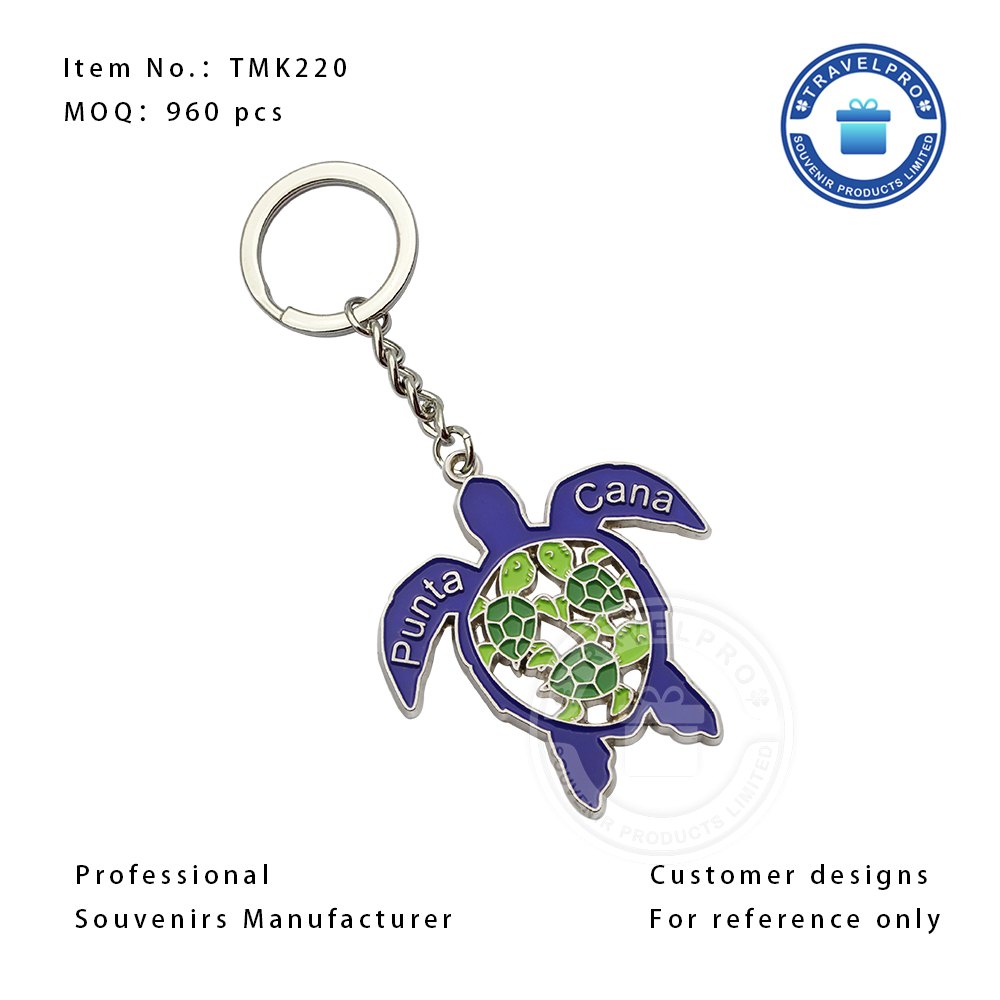
Every manufacturing material carries distinct advantages and inherent limitations. We present this objective breakdown to highlight specific trade-offs. No single material perfectly suits every retail environment. You must match the material characteristics to your unique sales environment.
Material Trade-off Chart
Material Type | Perceived Value | Initial Tooling Cost | Durability | Ideal Retail Environment |
|---|---|---|---|---|
Zinc Alloy / Metal | High | High | Excellent | Luxury Resorts, Museums |
Soft PVC | Medium-Low | Low | High (Drop-proof) | Theme Parks, Kiosks |
Acrylic | Medium | Very Low | Moderate (Scratches) | Seasonal Events, Pop-ups |
Wood & Leather | Medium-High | Medium | Moderate | National Parks, Eco-Lodges |
Zinc alloy remains the industry standard for high-end retail channels. Manufacturers melt the metal and inject it into custom steel molds. This process creates crisp details and substantial physical weight.
Pros: High perceived value immediately justifies premium pricing. It provides excellent overall durability. The metal supports intricate 3D designs and brilliant enamel color fills.
Cons: Initial mold and tooling fees run higher than other options. The heavy material density significantly increases global shipping weight.
Best For: Heritage sites, luxury resorts, and boutique museum gift shops.
Soft PVC offers a playful, highly durable alternative to rigid metals. Factories inject liquid PVC into molds and bake them to cure. The result feels flexible and rubbery.
Pros: This material is incredibly cost-effective at scale. It allows for vibrant Pantone color matching. The flexible nature makes it entirely drop-proof.
Cons: It carries a noticeably lower perceived premium value. The rubbery surface can attract dust and lint over time on store shelves.
Best For: Theme parks, beachside kiosks, and family-oriented attractions.
Acrylic items consist of printed designs sandwiched between clear plastic layers. They offer the fastest route from design to physical product. Manufacturers laser-cut the shapes rapidly.
Pros: Acrylic requires very low minimum order quantities. It boasts rapid production times. The flat surface supports full-color CMYK photo printing perfectly.
Cons: The plastic surface is prone to scratching in crowded retail bins. Unprotected edges can occasionally chip if dropped onto concrete floors.
Best For: Fast-moving trend items, seasonal destination events, and highly detailed visual graphics.
Natural materials bring warmth and authenticity to souvenir collections. Buyers increasingly demand options outside of traditional metals and plastics. Laser engraving provides precise branding on these organic surfaces.
Pros: Wood and leather strongly appeal to sustainability-minded tourists. They offer a unique, premium tactile feel.
Cons: Natural grain variations can lead to inconsistent batches. Branding requires specific laser engraving or UV printing techniques.
Best For: National parks, eco-lodges, and mountain resorts.
Vague orders lead directly to manufacturing disasters. You must document exact requirements before requesting a quote. Clear instructions prevent factories from substituting cheaper, inferior components.
The main pendant is useless if the attachment hardware fails. Buyers must specify jump ring thickness to prevent breakage. We recommend a minimum 1.5mm wire gauge for jump rings. You should also mandate the chain link style. Triangle jump rings offer better tension resistance than standard circular ones. Specify the split-ring gauge clearly. A 25mm diameter flat split-ring prevents keys from sliding off accidentally. Weak hardware ruins the customer experience instantly.
Surface treatments dictate how long the item remains attractive. You need to understand the differences between soft enamel, hard enamel, and epoxy domes. Soft enamel leaves recessed colored areas and raised metal borders. Hard enamel polishes flush for a smooth, premium surface. Epoxy domes add a clear resin layer over printed designs. This dome acts as a protective shield. These finishes directly impact scratch resistance in crowded retail display spinners. Hard enamel resists scratching far better than exposed soft enamel.
Ignorance of consumer safety laws puts your entire business at risk. You must highlight the importance of specifying lead-free, nickel-free, and phthalate-free materials. Regional consumer safety laws enforce strict chemical limits. California's Proposition 65 requires clear warning labels if certain chemicals are present. The European Union enforces REACH regulations aggressively. Request compliance testing reports from your manufacturer. Failing a random customs inspection will result in destroyed inventory and massive fines.
Basic designs compete purely on price. You can escape this race to the bottom by adding clever upgrades. Thoughtful additions transform a simple token into a functional tool.
Evaluate the return on investment for adding utility features. Practical tools encourage tourists to use the item daily. Consider integrating bottle openers into metal designs. Spinning center elements provide satisfying tactile engagement. Trolley coins offer massive utility for European and UK retail markets. These small additions slightly increase production costs. However, they easily justify a significantly higher retail price. Customers gladly pay more for items offering actual utility.
Many buyers ignore the reverse side of their products. This empty space represents valuable real estate. We recommend using the reverse side for debossed resort logos. You can also integrate scannable barcodes directly into the mold. This streamlines your retail scanning process at checkout. Adding QR codes allows customers to rebook trips or visit your website. Maximizing the back side adds zero extra weight but tremendous operational value.
How your product arrives dictates how it sells. Bulk polybag packing is much cheaper. However, it carries a much higher scratching risk during transit. Products banging against each other ruin delicate platings. Contrast this with custom backing cards. Backing cards carry a higher initial cost. They provide vastly better retail presentation. Cards prevent items from tangling and result in fewer damaged units. They also offer space for storytelling and barcoding.
Finding a factory is easy. Finding a reliable manufacturing partner is difficult. You must ask difficult questions upfront to separate professionals from amateurs. Price alone should never dictate your final choice.
Mold fees represent a significant initial investment. You must ensure the supplier agreement explicitly states who owns the physical mold. Some factories hold molds hostage to prevent you from switching suppliers. A reputable manufacturer will confirm mold ownership in writing. They should store the mold safely for subsequent runs. Ask how many injection cycles the mold can withstand before requiring replacement. Transparency here prevents painful disputes down the road.
Never approve mass production based solely on digital artwork. You must outline a strict shortlisting process. Always request a pre-production physical sample (PPS). This physical item allows you to test the weight, hardware tension, and color accuracy. Review the PPS under your actual retail store lighting. Greenlighting mass production without a PPS is a massive financial gamble. A professional factory welcomes the sampling process.
Assume defects will happen. The key is how the factory handles them. Ask manufacturers about their exact defect tolerance percentage. Acceptable industry standards typically hover around 2% to 3%. Inquire about their specific plating inspection process. Ask for color-matching guarantees using the Pantone solid coated system. A trustworthy factory will happily replace or refund units failing these agreed-upon standards. Document these QC protocols in your final purchase agreement.
Material selection dictates both your upfront tooling investment and your long-term retail pricing strategy.
Always define specific hardware gauges and chemical compliance requirements before requesting factory quotes.
Upgrading designs with utility features and premium packaging protects your profit margins from budget competitors.
Draft a standardized Request for Quotation (RFQ) including material preferences, target dimensions, and safety compliance.
Send this structured RFQ to multiple vetted manufacturers to ensure competitive and accurate pricing.
A: It varies significantly by material. Acrylic items can be produced with MOQs as low as 100 units. Custom die-cast metal designs usually start at 500 or more units to absorb the higher steel mold costs effectively. Soft PVC typically requires MOQs around 300 to 500 units.
A: Standard zinc alloy molds last for thousands of injection units before degrading. Reputable suppliers keep your molds on file safely for 1 to 2 years. This practice makes reordering fast and eliminates repeat tooling fees for unchanged designs.
A: Yes, materials like bamboo, recycled PET, and sustainably sourced wood are growing rapidly in popularity. They attract eco-conscious tourists. However, note the trade-off in slightly higher unit costs and longer production lead times compared to standard plastics.

