
Views: 0 Author: Site Editor Publish Time: 2026-10-13 Origin: Site


Sourcing unique, branded merchandise often introduces a major friction point for modern retailers. You want distinct inventory to capture retail sales. Yet, you must balance this desire against the capital risk of large production runs. Minimum Order Quantity (MOQ) requirements frequently complicate this balance. However, MOQ is not an arbitrary supplier penalty. Instead, it serves as a direct reflection of manufacturing realities. It accounts for setup costs, raw material sourcing requirements, and production line efficiency. When you evaluate vendor quotes for souvenir gifts, knowing how these numbers originate is vital. Understanding the hidden variables behind custom souvenir MOQ requirements allows you to accurately analyze cost-to-benefit ratios. You can confidently shortlist suppliers who align with your budget and business goals. We will break down exactly how material choices, tooling, and supplier types dictate your minimum commitments.
Let us unpack why factories enforce minimums in the first place. It comes down to basic industrial economics and resource allocation. Manufacturers operate on tight margins. They rely on volume to sustain operations.
Factories calculate the time and labor necessary to calibrate machinery. Every new design demands specific adjustments. Engineers must align stamping presses. They program CNC machines and calibrate injection molds. These fixed costs happen before a single item leaves the line. MOQs ensure they distribute these expenses across enough units. This distribution maintains profitability for the manufacturer. Without it, setup labor would eclipse the value of the goods produced. If a factory spends five hours setting up a machine, running it for only ten minutes makes no financial sense. They need continuous operation to absorb those initial labor costs.
Manufacturers rarely hold unlimited stockpiles of every material. They face their own minimums from upstream raw material suppliers. If your design requires specific zinc alloys or custom-dyed PVC, the factory must buy these in bulk. They cannot purchase a few pounds of specialized raw material just for you. They pass this constraint down to buyers. This creates a natural baseline for how many units they must produce. For example, a supplier might need to buy liquid silicone in large industrial drums. Your order must consume enough of that drum to justify the purchase.
Consider the business reality of a busy factory floor. Halting a high-volume production line to run a small-batch order introduces costly downtime. Every hour spent swapping molds for a tiny order costs the factory potential revenue. They lose out on continuous, large-scale production runs from bigger clients. Consequently, factories mandate order minimums to justify interrupting their main revenue streams. Production efficiency plummets when machines stop and start repeatedly. By enforcing volume thresholds, plant managers keep their operations running smoothly.
Your design choices actively dictate your order minimums. Let us look at how product features influence these numbers. You can often tweak a design to lower your required commitment.
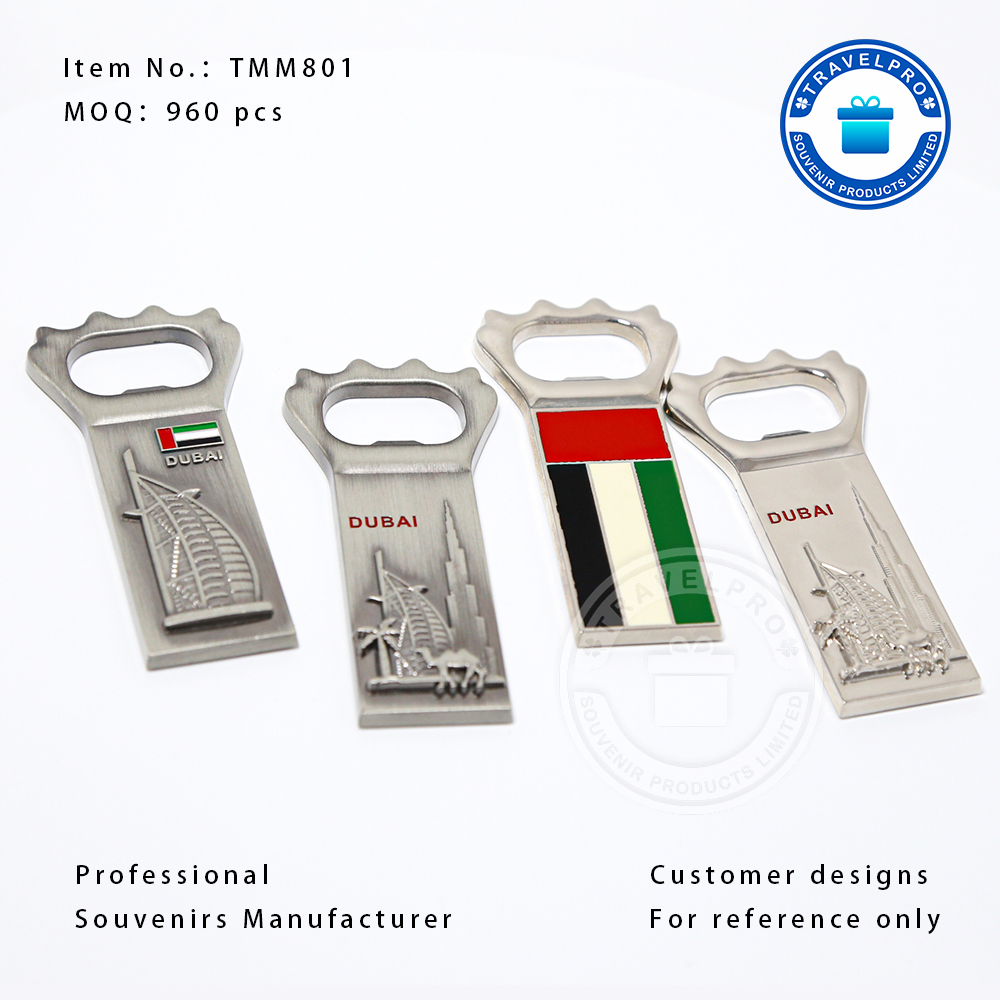
Creating custom physical shapes requires significant upfront engineering. Off-the-shelf blanks have lower thresholds because factories already own the molds. Fully bespoke shapes demand CNC-machined steel molds. This raises the barrier to entry. For example, a standard printed acrylic keychain carries a very low threshold. Conversely, a 3D custom bottle opener magnet requires a specialized die-casting mold. The factory must pour metal into a custom cavity. This complex tooling process automatically drives up the required order volume. The more intricate your design, the higher the barrier becomes.
Your chosen base material plays a massive role in factory requirements. We can categorize materials into two main buckets:
Therefore, choosing standard materials keeps your minimums manageable. It significantly reduces the factory's supply chain burden.
How you apply your design matters just as much as the shape. Surface-level customization usually allows for much lower MOQs. Techniques like laser engraving or UV printing happen quickly on pre-existing blanks. They require minimal mechanical setup. Structural customization is entirely different. Techniques like deep embossing, 3D die-casting, or custom enameling alter the physical core. These intensive processes inherently require larger batch commitments. They demand specialized labor and longer curing or cooling times.
The type of partner you choose dramatically alters your purchasing reality. Different vendors serve entirely different business models. You must align your order volume with the correct type of supplier.
| Vendor Category | Typical MOQ Range | Ideal Buyer Profile | Primary Advantages | Notable Drawbacks |
|---|---|---|---|---|
| Direct Manufacturers | 500 - 5,000+ units | Established Retailers | Lowest unit cost, total control | High capital needed, longer leads |
| Trading Companies | 100 - 500 units | Mid-Sized Buyers | Order bundling, easier negotiation | Slight markup on unit prices |
| Print-on-Demand | 1 - 50 units | Proof-of-Concept Testers | Zero inventory risk, fast shipping | High unit cost, limited customization |
Partnering directly with a factory suits established retail operations perfectly. These entities typically demand high order minimums. They operate massive industrial equipment. However, they offer the lowest per-unit cost available in the market. You gain total customization control over the product from start to finish. The trade-offs include needing high upfront capital. You must also accommodate longer lead times for production and international shipping.
Trading companies act as strategic intermediaries. They are ideal for mid-sized buyers who want custom items without massive risk. They often bundle orders from multiple smaller clients. This practice allows them to secure factory production while offering you lower minimums. They handle complex factory negotiations on your behalf. They also manage language barriers and quality control checks. The main drawback is a slight markup applied to the per-unit cost. You pay for their convenience and network access.
If you need proof-of-concept testing, blanks modifiers work beautifully. They carry almost zero inventory risk. You can order five or ten units at a time. This allows you to test market demand before committing heavy capital. However, this convenience comes at a steep price. Expect a very high unit cost. Furthermore, you remain restricted strictly to surface printing on generic items. You cannot alter the physical shape or core material of the merchandise.
Suppliers offering surprisingly low commitments might seem tempting. Yet, these offers frequently conceal critical risks. You must evaluate them with healthy skepticism.
Accepting a tiny order size often destroys your profitability. Let us look at the math. If you order 50 custom pieces, the setup costs distribute across very few items. A steep mold fee adds significant cost to every single item. This heavily inflates the final price of each piece. You might secure the inventory easily. But the inflated unit prices eliminate your retail profit margins. You will struggle to price the item competitively in your shop. Your customers will likely balk at the high retail price tag.
Some suppliers accommodate small orders by cutting critical corners. They need to preserve their margins somehow. They might skip the crucial prototype phase entirely. They push right into production to save time. Others reduce their quality assurance processes. In worst-case scenarios, factories use inferior scrap materials to fulfill minor orders cheaply. This quality dilution severely harms your brand reputation. When customers buy defective goods, they do not return.
Reputable factories strictly adhere to consumer safety regulations. They ensure compliance with standards like CPSIA. They use certified lead-free paint and non-toxic materials. Extremely small batch offers from unverified vendors often bypass these necessary testing protocols. Laboratory testing costs money. Skipping certification processes saves the vendor money upfront. But it passes significant legal and financial risk directly to you as the buyer. You become responsible for importing non-compliant goods.
You do not always have to accept the first quote blindly. Smart buyers use specific strategies to optimize their commitments. You can negotiate terms that benefit both you and the manufacturer.
Standardizing your base mold is a highly effective tactic. You can order a larger overall quantity to satisfy the factory, but vary the final finish. This satisfies their need for volume while giving you variety.
This approach satisfies the singular mold requirement while diversifying your retail offerings on the shelf.
Warehouse space represents another hidden expense for buyers. You can negotiate phased rollouts to manage this logistical hurdle. Frame your negotiation carefully. Offer to pay upfront for the custom mold and the full material cost. Then, ask the factory to split the actual production run into two smaller, scheduled batches. They hold the raw materials. They produce and ship the second half three months later. This tactic secures the factory's margin while easing your immediate storage burdens.
Always analyze supplier proposals meticulously. Use a consistent framework to compare different vendors. First, verify if tooling costs are separate line items or baked into the unit price. Transparent quotes separate these fees clearly. Second, check for mold refund policies. Many reputable factories will refund your initial tooling fee if your future order volumes reach a specific threshold. Knowing this helps you plan long-term reorder strategies.
Navigating order minimums remains an essential exercise in risk management and capital allocation. You must balance your desire for highly unique inventory against practical manufacturing limits. We recommend looking closely beyond the raw minimum number presented on a quote. You should meticulously assess your overall procurement expenses. Factor in the base unit price, international shipping fees, quality assurance checks, and upfront tooling investments. Do not fall for artificially low minimums that compromise product safety or erase your retail margins.
Instead, take proactive steps today. Audit your current inventory needs and sales forecasts. Reach out to shortlisted vendors and request structural samples to verify their quality. Finally, submit your design files for a segmented quote analysis. By doing so, you will find a manufacturing partner capable of scaling safely with your brand.
A: Yes, reputable factories typically allow prototyping. You will pay a standard, non-refundable tooling or sample fee upfront. This covers the labor to create the initial mold and run a single test item. If you approve the sample and proceed, suppliers often credit this sample fee toward your bulk production order.
A: Custom metal items require intensive structural manufacturing. Factories must CNC-machine steel molds and use high-heat die-casting equipment to shape zinc alloys. This complex setup demands higher volumes to justify the labor. In contrast, flatbed UV printing on stock acrylic requires almost no mechanical setup, enabling much smaller batches.
A: Generally, minimums apply strictly per design or per mold, not to your total overall order. Every unique shape requires a distinct mold setup. However, many factories allow exceptions for simple color variations or distinct plating finishes, provided the underlying physical shape remains exactly the same.

