
Views: 0 Author: Site Editor Publish Time: 2026-08-13 Origin: Site


In tourism retail, merchandising margins rely heavily on a delicate balance. You must carefully weigh manufacturing unit costs against perceived customer value. When sourcing fresh retail inventory, buyers often face a difficult choice. They must decide between the classic aesthetic of stamped enamel and the modern visual precision of printed metals. Each style fundamentally changes how visitors perceive your destination brand.
This guide breaks down essential production realities, unit economics, and aesthetic trade-offs. Retail directors will learn exactly how to navigate these distinct manufacturing options. We aim to help you confidently order your next batch of custom souvenir pins. You will discover actionable insights regarding material durability, rigid artwork constraints, and buyer psychology. Read on to master the inventory production process and boost your retail revenue.
Maximizing profitability inside a tourism gift shop requires strategic inventory planning. Retail managers must optimize every available square inch of display space. High-density, low-footprint items drive crucial impulse purchases. Metal lapel pins excel in this specific retail category. They take up minimal counter space while generating maximum revenue per square foot. They serve as the perfect high-margin profitability engine.
However, brand representation remains a serious consideration. A poorly executed local landmark damages institutional credibility. If a museum shop sells a sloppy reproduction of a famous painting, visitors lose trust in the merchandise quality. You must translate your brand artwork accurately into metal. Customers want an authentic memento reflecting their memorable travel experience.
We define a successful retail pin run using three core success criteria. First, the item must showcase accurate brand representation. Second, it must demonstrate high inventory velocity. It should sell quickly without gathering dust. Third, the product requires strong physical durability. It must survive intense backpack wear-and-tear during subsequent travel. Meeting these criteria ensures a robust return on your initial manufacturing investment.
Understanding the production reality helps buyers make informed purchasing choices. Factories create soft enamel designs using a traditional stamping and baking process. Heavy machinery strikes a custom metal die against a brass or iron base. This action raises distinct metal ridges. Workers then pool liquid enamel carefully into the recessed cavities. The factory bakes the pieces, creating a highly tactile 3D texture.
This traditional method delivers notable visual strengths. Buyers immediately recognize the high perceived value. A soft enamel lapel pin possesses a classic collector aesthetic. People love running their thumbs across the textured surface. Furthermore, baked enamel offers excellent durability. The recessed colors remain protected by the raised metal borders even without clear protective coatings.
Despite these benefits, you must respect strict artwork constraints. Soft enamel simply cannot accommodate color gradients. It cannot handle subtle shading or ultra-fine text. The manufacturing process requires simplified artwork. You must break designs down into distinct, solid-color zones. Metal lines must border every single color zone. You cannot blend two liquid enamel colors in the same recessed cavity.
Retail use cases lean heavily toward bold, iconic imagery. This style proves ideal for stylized national park graphics. It works perfectly for energetic sports mascots. Minimalist architectural shapes also translate beautifully into soft enamel. We highly recommend this tactile format for any retro-style souvenirs targeting avid pin collectors.
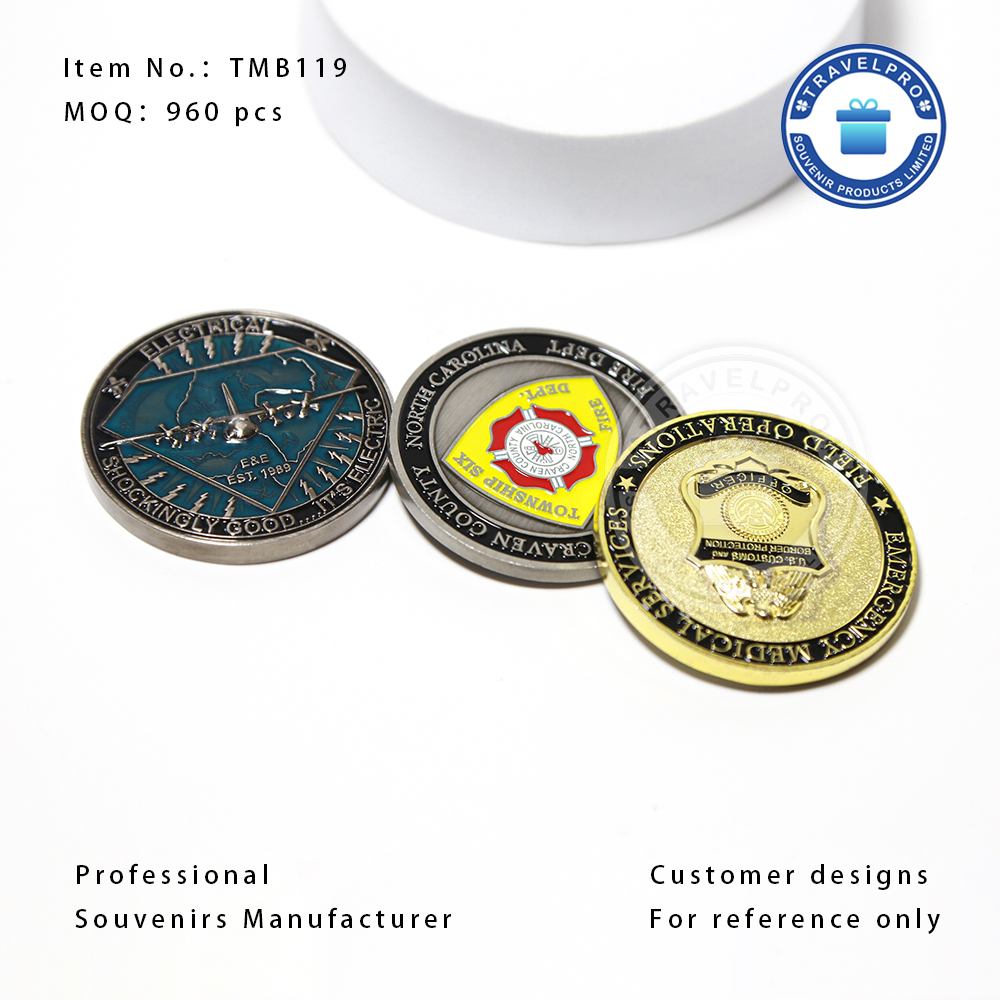
When artwork refuses simplification, printing provides the ultimate solution. The production reality involves advanced offset or silkscreen printing methods. The factory applies the exact digital image directly onto a flat metal base. They do not stamp ridges or pool liquid colors. Instead, they seal the final printed surface beneath a clear epoxy dome. This protective layer ensures the ink never scratches off.
Visual strengths center entirely around perfect replication. A printed metal badge allows for limitless colors. It handles smooth gradients flawlessly. You can achieve stunning photographic realism. If you need to print a sweeping sunset or a highly detailed historical photograph, this method delivers exact precision.
Artwork constraints virtually disappear under this manufacturing method. You face no requirement to alter complex institutional logos. Intricate fine-art reproductions transfer directly from the digital file to the metal base. You skip the painful process of adapting a delicate watercolor painting into chunky, solid-color enamel blocks.
Specific retail environments demand this level of uncompromised fidelity. It serves as the default choice for prestigious art museum gift shops replicating famous paintings. Corporate-sponsored event merchandising also relies heavily on printed options. Brands often refuse to modify their complex typography. Printing guarantees strict adherence to rigid corporate branding guidelines.
Choosing the correct manufacturing style requires evaluating your specific retail environment. You must align your production choice against your customer expectations and operational needs. We analyze four crucial factors below to guide your wholesale ordering strategy.
First, evaluate perceived value against your target audience. Serious pin collectors generally prefer the authenticity of stamped enamel. They actively trade items displaying traditional textured craftsmanship. Conversely, casual tourists prioritize immediate visual recognition. They want a tourism retail pin depicting the exact landmark they just visited. They care less about manufacturing techniques and more about memory preservation.
Second, consider factory turnaround times. Urgent seasonal restocks happen frequently in tourism retail. Printed pins typically bypass the manual enamel-filling and slow baking stages. This streamlined approach generally shaves crucial days off production timelines. If a summer festival approaches rapidly, printing offers a safer delivery guarantee.
Third, analyze unit economics at scale. Soft enamel requires expensive custom mold fees upfront. Printing involves lower initial setup fees. For small runs, enamel often looks costly. Explain the breakeven points for large-scale wholesale orders carefully. At high volumes, the unit cost difference narrows significantly. Factory efficiency eventually offsets the initial mold investment.
Finally, review long-term durability factors. Baked enamel boasts incredible scratch resistance. The metal ridges take the physical impact. Printed pins rely entirely on the epoxy dome. Over time, UV exposure sometimes causes cheaper epoxy to yellow slightly. Heavy abrasion can also scratch the dome surface. You must balance the immediate visual perfection against these potential long-term wear risks.
| Manufacturing Feature | Soft Enamel | Printed Metal |
|---|---|---|
| Surface Texture | Raised metal, recessed color | Completely flat beneath a dome |
| Gradient Support | None (Solid colors only) | Full support (Photographic) |
| Production Speed | Standard (Manual filling needed) | Faster (Direct to metal) |
| Ideal Artwork | Bold outlines, simple mascots | Complex logos, fine art |
Procuring custom merchandise involves navigating distinct implementation risks. Buyers must anticipate design translation failures before approving mass production. Discuss the danger of forcing a complex design into soft enamel. Fine text shrinks into illegible metal blobs. Important logo details disappear entirely. You end up selling a confusing, messy souvenir.
Conversely, you face the risk of a printed item feeling too cheap. If your original design features bold, simple shapes, it probably does not require printing. Slapping a basic two-color logo onto a flat metal base beneath epoxy wastes the opportunity for premium texture. Customers might perceive it as a generic promotional giveaway rather than a premium retail souvenir.
Compliance and ethical sourcing require strict attention. Family-oriented tourism hubs sell heavily to younger demographics. You must verify the use of non-toxic, lead-free materials. Any wholesale logo badge accessible to children must meet rigorous safety standards. For example, ensure your factory strictly complies with CPSIA regulations in the United States. Demand transparency regarding metal plating and enamel paint compositions.
We recommend specific next-step actions before finalizing massive orders. Never commit blindly to a multi-thousand unit purchase order based on a digital rendering. Order physical pre-production samples first. Alternatively, request a manufacturer's past sample pack. Test the tactile feel yourself. Evaluate color accuracy under your specific retail store lighting. This physical inspection prevents disastrous inventory mistakes.
Merchandising success depends on matching the right manufacturing technique to your unique artwork. We can summarize the core decision rule simply. Let the complexity of your graphic design and the specific expectations of your target buyer dictate the method. Do not force photographic details into enamel molds. Do not flatten beautiful, bold artwork into simple printed discs.
Take charge of your retail strategy by partnering carefully. Emphasize the importance of working with manufacturing partners who provide honest pre-production digital proofs. Demand strict material transparency. A reliable supplier will advise you when an enamel design needs simplification.
A: Yes, you can combine both techniques. Factories use a process called screen-printing over enamel. They stamp and fill the base design using soft enamel. Then, they screen-print delicate details directly onto the baked enamel surface. This perfectly adds ultra-fine text or tiny eyes to a textured pin. However, note this dual process creates a slight increase in your final unit cost.
A: Printed pins absolutely require an epoxy dome for essential surface protection. The factory applies digital ink directly onto a smooth metal base. Without a protective layer, this ink remains highly vulnerable. The clear epoxy dome prevents the printed design from scratching off during transit. It also protects the artwork against daily wear and tear when attached to apparel or backpacks.
A: Printed pins are often slightly lighter. They use a thinner, flat metal base to receive the printed image. Conversely, factories stamp enamel dies deeply into thicker brass or iron bases to create sturdy ridges. While the printed option weighs less, the actual differences per unit remain minimal. Both options hang easily on standard retail display cards.
A: The answer depends heavily on your order volume. Mold fees make small runs of enamel noticeably pricier upfront. However, at high manufacturing volumes, the cost difference narrows significantly based on your color count. Printing carries lower setup fees but includes the extra epoxy step. You should always request quoted breakeven points for large-scale wholesale orders.

