
Views: 0 Author: Site Editor Publish Time: 2026-06-03 Origin: Site


Retailers, tourism boards, and merchandise planners face a constant trade-off when procuring custom inventory. You must balance unit production costs against the perceived value delivered to your end consumer. Choosing between a standard flat metal item and a fully sculpted 3D variant impacts your entire operation. This single choice dictates mold fees, shipping weights, lead times, and your retail pricing strategy.
Getting this decision wrong often results in bloated inventory or missed profit margins. We provide an evidence-based comparison here to help buyers evaluate these manufacturing options. You will discover exactly how production methods dictate structural integrity and commercial outcomes. We outline the hidden risks embedded in the procurement process. By the end, you can confidently finalize your inventory strategy based on realistic manufacturing timelines and true return on investment.
Standard metal souvenir keychains (2D/die-struck) offer lower mold fees, faster scalability, and higher margin potential for high-volume tourist markets.
3D metal keychains deliver a premium tactile experience that justifies higher retail price points but require higher upfront mold investments and longer production timelines.
Most custom metal keyrings—whether 2D or 3D—utilize zinc alloy for its durability and casting precision, but the molding process dictates the final structural integrity and weight.
Decision-makers must weigh shipping costs; the added weight of 3D designs can significantly impact total landed costs for bulk orders.
Before launching a new merchandise line, you must understand the fundamental engineering differences between common manufacturing techniques. The structural baseline of your product determines its physical limits and visual appeal. A standard metal souvenir keychain follows a very different production journey compared to multi-dimensional pieces.
Standard die-struck pieces feature flat surfaces divided by raised and recessed areas. The factory stamps or casts the artwork onto a single geometric plane. Raised metal borders separate different enamel color fills. This creates a clean, easily readable surface. Typographic elements remain sharp and highly legible. Most buyers prefer this approach for traditional merchandise. It allows for strict brand guideline adherence. You can match precise Pantone colors easily inside the recessed cavities. The flat profile makes mass production highly efficient.
In contrast, 3D manufacturing sculpts the object across multiple axes. Molds require complex CNC machining to carve deep cavities. The process produces true miniature replicas rather than flat badges. Think of tiny architectural landmarks, detailed animal mascots, or miniature vehicles. This technique offers significant visual impact and depth. Consumers immediately recognize the higher craftsmanship. However, this method demands precise engineering. You must account for draft angles so the metal releases from the mold properly. The intricate layers require highly skilled mold makers.
Despite the different visual outcomes, both styles rely heavily on the same foundational material. A zinc alloy keychain represents the industry standard for a reason. Zinc alloy melts at a relatively low temperature. It flows easily into complex mold cavities before solidifying. This characteristic ensures excellent high-detail retention. It captures microscopic textures perfectly. Furthermore, zinc alloy resists natural corrosion. It survives daily exposure to moisture and hand oils. From a procurement standpoint, this material keeps unit costs manageable while delivering a heavy, premium feel. Both 2D and 3D variants leverage these exact metallurgical benefits.
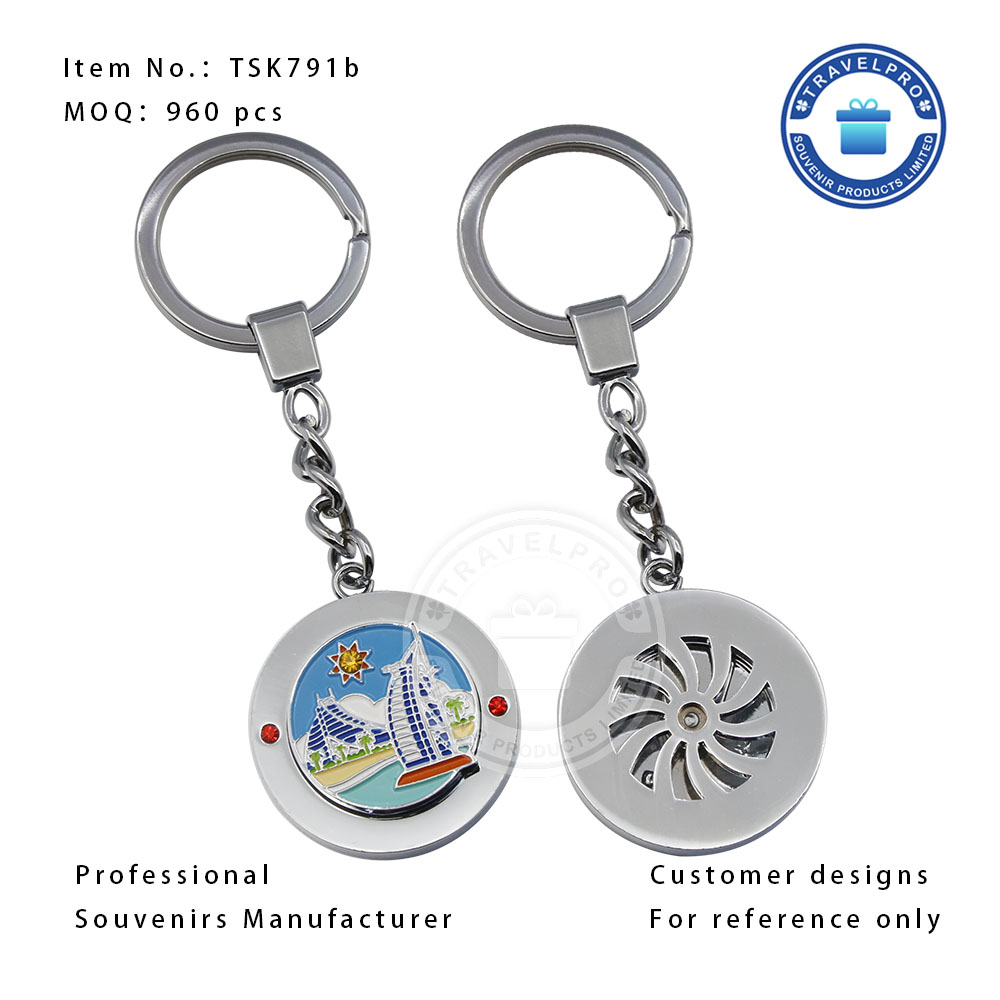
Procurement teams must translate physical product features into tangible commercial outcomes. Evaluating a custom metal keyring involves more than just aesthetics. You must analyze the financial implications of tooling, retail positioning, and product lifespan.
Mold fees create the biggest initial barrier for custom merchandise. Understanding these costs helps you set realistic budgets.
Standard 2D: Setup costs remain exceptionally low. Technicians machine these molds quickly on a single plane. The simplicity keeps tooling fees manageable. You can launch multiple designs simultaneously without draining your capital.
3D Designs: You face a much higher barrier to entry. Multi-part mold requirements demand advanced CNC machining. Technicians must carve intersecting angles and deep undercuts. This complexity drives up initial tooling expenses significantly.
Outcome: Because 3D molds cost more, you must order larger batch quantities. Higher Minimum Order Quantities (MOQs) help amortize the initial mold investment effectively. You spread the heavy tooling cost across thousands of units.
Your chosen dimension directly impacts how much consumers will pay. You must align your design with your target retail bracket.
Standard 2D: This format competes heavily on volume. Consumers expect to see these items as a standard, low-cost tourist gift keychain. They buy them impulsively at checkout counters. You rely on high turnover rather than massive profit per unit.
3D Designs: You can position these pieces as premium collectibles. The tangible depth communicates superior craftsmanship. This perceived value allows for a much higher retail markup. Retailers often charge two to three times more for a sculpted replica.
Merchandise must survive harsh environments. Keys rub against coins, phones, and fabric constantly.
Standard 2D: The low profile means fewer protruding edges. Flat pieces slide smoothly in and out of pockets. They rarely catch on fabric threads. The enamel sits safely below the raised metal borders, preventing severe scratching.
3D Designs: High detail can lead to hidden structural vulnerabilities. Intricate parts like thin metal extrusions might bend under pressure. Protruding noses, spires, or limbs act as stress points. If engineers do not thicken these areas during the design phase, the product will break during daily use.
Below is a summary chart comparing the commercial outcomes of both options:
Evaluation Metric | Standard 2D Metal | 3D Metal Sculpted |
|---|---|---|
Tooling Investment | Low (Simple single-plane machining) | High (Multi-axis CNC machining) |
Expected Retail Margin | Moderate (High volume reliant) | High (Premium pricing strategy) |
Pocket Durability | Excellent (Low profile, snag-free) | Moderate (Vulnerable protruding edges) |
Required Order Volume | Low to Medium (Flexible scaling) | High (Needs amortization) |
Buyers often overlook the logistical hurdles attached to custom manufacturing. A beautiful souvenir keychain design on screen does not guarantee a smooth production run. You must proactively manage material weight, extended timelines, and finishing inconsistencies.
Weight directly impacts your freight invoices. 3D pieces require significantly more raw zinc alloy. A flat badge might weigh 20 grams. A sculpted replica of a building might easily weigh 55 grams. This increases the per-unit weight drastically. Heavier products inflate bulk freight and shipping costs. If you plan to ship via air freight to meet a deadline, this extra weight destroys your profit margins. Sea freight offers relief, but it introduces massive delays. You must calculate these shipping increases early in your procurement cycle. Do not assume flat-rate shipping applies to bulky metal goods.
Time kills merchandise margins, especially for seasonal tourism events. Complex 3D molds require extended prototyping phases. QA teams must verify every dimensional angle physically. They must ensure the metal flows into the deepest mold cavities without creating air bubbles. Factories often require multiple revision rounds. You might need to adjust a protruding edge or thicken a fragile joint. Each revision adds weeks to your standard lead times. Standard 2D pieces move from artwork to mass production swiftly. Multi-axis designs demand patience and rigid milestone tracking.
The final aesthetic finish presents unique operational challenges. Factories automate flat metal polishing easily. Large polishing wheels buff 2D surfaces in seconds. Automated syringe machines inject liquid enamel into flat cavities perfectly. 3D objects ruin this automation. Workers must polish intricate crevices manually using small rotary tools. They must hand-paint colored details onto curved surfaces. Hand-painting introduces slight batch-to-batch inconsistencies. You might notice tiny color variations across a large order. A seasoned buyer anticipates these manual labor quirks. You should establish acceptable variance tolerances before signing the final purchase order.
Making the final choice requires matching your business goals to the correct manufacturing reality. Review these practical scenarios to select the optimal format for your specific project.
Your primary goal is high-volume turnover. You operate standard airport kiosks or mass-market tourist shops. You need fast-moving inventory at approachable price points.
The artwork relies heavily on text. You need precise typography. Flat logos render beautifully here. You require strict Pantone color matching using soft or hard enamel.
Speed to market is critical. You have a tight deadline for an upcoming festival or event. You cannot afford lengthy prototyping revisions.
Shipping weight limits apply. You need to transport thousands of units via air freight without destroying your margins. You prefer lightweight, low-profile packaging.
You are replicating a physical product. You want to showcase a mascot, a regional animal, or an architectural landmark. Depth serves as your main selling point. You want to offer a true miniature replica.
You target a premium demographic. Your audience willingly pays boutique prices for high-quality merchandise. You sell through museum gift shops, luxury resorts, or exclusive pop-up stores.
You have a healthy tooling budget. You can absorb higher upfront tooling costs comfortably. Your order volume justifies the complex CNC mold fees.
You accept longer production windows. Your event remains several months away. You have ample time for prototyping, structural revisions, and manual QA inspections.
By mapping your project against this matrix, you remove emotional bias from the design process. You ensure your chosen format supports your revenue targets rather than hindering them.
Choosing between a standard flat metal piece and a complex 3D sculpted item shapes your entire retail strategy. Neither option is inherently superior. The "better" choice depends entirely on your margin requirements, your target retail price, and your specific design complexity.
Standard flat versions dominate high-volume environments due to reliable margins, predictable lead times, and crisp branding. Multi-dimensional pieces capture the premium market through unmatched tactile appeal and striking craftsmanship, provided you can handle the logistics.
To move forward confidently, recommend starting with a low-volume 2D prototype. Use this test run to gauge market viability and consumer interest. Simultaneously, request physical samples of previous 3D metal keychain projects from your manufacturer. Feeling the weight and inspecting the finish in person provides invaluable insight. Finalize your procurement choice only after handling physical samples and calculating your total landed freight costs.
A: Yes. 3D designs require complex, multi-part CNC molds, which significantly increases upfront tooling fees. Additionally, because they consume more raw zinc alloy and often require manual polishing and hand-painting, the per-unit cost remains higher even at scale compared to automated 2D production.
A: Zinc alloy serves as the optimal material. It boasts a lower melting point than iron, allowing it to flow smoothly into intricate mold cavities. This ensures the casting captures minute details accurately. It also resists corrosion naturally and provides a premium, heavy feel.
A: Yes, but it presents challenges. Unlike flat 2D items where automated syringes fill recessed cavities with enamel, 3D objects typically require manual hand-painting. This intensive labor increases costs and can introduce slight batch-to-batch visual inconsistencies across the curved surfaces.
A: 3D sculpted items often use twice the raw material of flat badges. This extra weight inflates bulk freight invoices heavily. If you rely on air freight for rapid delivery, the heavier cargo will substantially reduce your profit margins compared to standard lightweight 2D orders.

