
Views: 0 Author: Site Editor Publish Time: 2026-09-27 Origin: Site


For souvenir retailers and bulk distributors, profit margins live and die by material selection. Shipping logistics and perceived customer value also play massive roles in your success. Deciding between MDF (Medium-Density Fiberboard) and metal directly impacts your bottom line. It dictates landed costs, production lead times, and your retail pricing strategy. A wrong choice can leave you holding dead stock. A brilliant choice creates highly profitable, best-selling merchandise.
This guide breaks down the manufacturing realities, hidden costs, and performance data. We help you evaluate which material aligns perfectly with your specific bulk order requirements. You will learn how to balance aesthetics, durability, and shipping economics effectively. Mastering these supply chain elements ensures you maximize returns across all your retail locations.
Profitability in the souvenir business requires looking well beyond the factory sticker price. The raw unit price is only half the equation. You must calculate the complete landed cost formula to understand true margins. This calculation includes freight weight, customs duties, and anticipated breakage rates. Heavy items destroy profit margins through incredibly high international shipping fees. Fragile items bleed your profit through transit damage before they ever reach shelves. We always recommend calculating the final delivered cost per unit. This reveals your actual profit potential accurately.
Retail positioning remains equally critical to your material choices. You must align your inventory carefully against specific store types. An airport kiosk relies on high foot traffic, quick turnarounds, and impulse buys. Here, budget-friendly materials thrive perfectly. Conversely, a luxury museum gift shop demands premium aesthetics. Customers happily pay more for heavy, tactile souvenirs commemorating an exclusive experience. They expect budget pricing for basic printed designs but value permanence. Your material choice directly signals your brand quality.
Turnaround realities also dictate your purchasing decisions heavily. Your chosen material directly dictates your factory lead times. Printing on ready-made blanks happens incredibly fast. Factories can process thousands of units weekly. Custom die-casting requires lengthy mold creation and setup phases. This adds weeks to your manufacturing timeline. You must align production schedules carefully alongside seasonal tourist peaks. Missed deadlines mean lost peak-season revenue. Plan your material choices around your strict inventory delivery schedule.
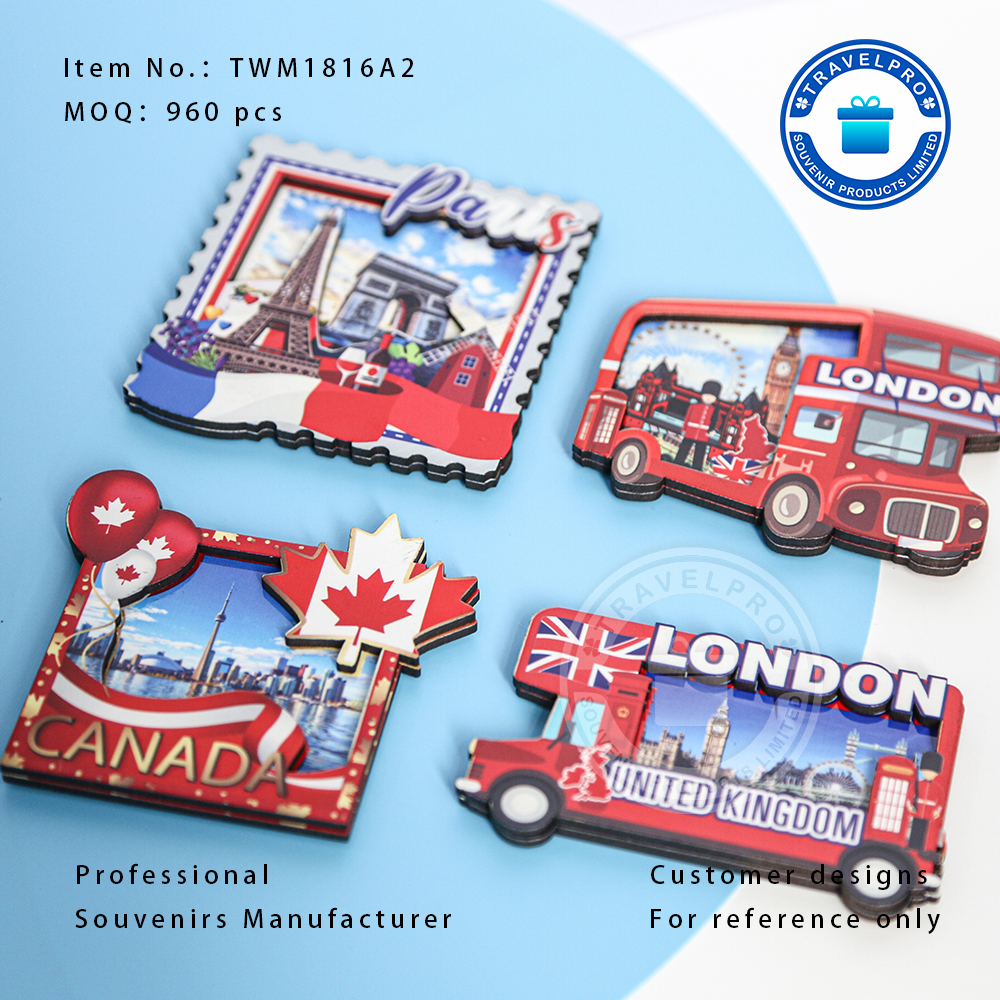
Medium-Density Fiberboard remains a highly versatile staple in the souvenir industry. It offers distinct advantages for specific high-volume retail models.
A MDF fridge magnet shines during full-color photographic production runs. UV printing and sublimation processes work beautifully on this surface. These methods reproduce vibrant, complex colors perfectly. You face no expensive mold fees. You avoid costly tooling charges entirely. This keeps upfront investments remarkably low for new designs. Furthermore, the lightweight profile drastically reduces bulk shipping costs. Air freight becomes a viable option for rush orders. You can restock empty shelves rapidly during unexpectedly busy seasons.
Skeptics point out legitimate concerns regarding fiberboard longevity. Bare edges absorb environmental moisture easily. This causes unsightly swelling in highly humid coastal environments. Edge-sealing prevents this issue entirely, but adds an extra production step. Dropping them on hard retail floors can chip sharp corners. Handling requires slightly more care than durable alloy alternatives. Over time, prolonged direct sunlight might fade cheap inks. You must source UV-resistant coatings to prevent this fading.
Fast-moving tourist markets love these lightweight souvenir items. Highly colorful photographic landscape designs look stunning on flat surfaces. Rapid-turnaround promotional runs rely heavily on this adaptable material. You can test new regional designs quickly and cheaply. If a design fails, your sunk costs remain exceptionally low. Inventory replenishment happens in days, not weeks. Budget-conscious tourists happily buy these items in multiples for friends and family.
Alloy-based souvenirs target an entirely different retail demographic. They offer striking permanence and a highly premium feel.
High perceived weight instantly signals exceptional quality to buyers. This tactile feel allows a significant retail premium markup. You can utilize stunning, high-end finishing techniques. Soft enamel, hard enamel, and 3D embossing look incredible on heavy bases. Die-striking adds deep, engaging textures. A metal fridge magnet is incredibly durable. You experience near-zero breakage during turbulent international freight. These heavy items survive rough retail handling effortlessly. They become lasting, cherished keepsakes for passionate travelers.
Upfront tooling fees are absolutely mandatory for custom shapes. Mold costs make small-batch runs entirely uneconomical. The heavy material heavily increases overall freight costs. Air freight often ruins your margins entirely here. You must plan ahead for slower sea freight delivery. Complex color gradients remain very difficult to achieve cleanly. Manufacturers usually restrict designs to solid spot colors. Epoxy domes can solve this gradient limitation, but they permanently alter the classic tactile feel.
Premium heritage sites demand this elevated level of quality. Corporate gifting programs prefer heavy, branded alloy items. Collectible series benefit immensely from consistent die-cast designs. Artworks needing striking metallic textures fit perfectly here. 3D reliefs require physical stamping pressure to execute correctly. Discerning tourists eagerly collect these premium items globally.
Choosing between MDF vs metal fridge magnets requires examining precise production variables closely. We break down the core differences comprehensively below.
Material Specifications Comparison Matrix
| Feature Category | MDF (Fiberboard) | Metal (Zinc/Iron Alloys) |
|---|---|---|
| Customization Flexibility | CMYK precision. Easily cut into custom shapes via laser. | Pantone color matching (enamel). Requires physical die-casting for custom shapes. |
| Minimum Order Quantities (MOQs) | Typically low (often 100–500 units) due to digital printing. | Typically higher (1,000+ units) to offset mold setup costs. |
| Magnet Strength Requirements | Often uses flexible magnetic sheets covering the entire back. | Requires strong, embedded neodymium or thick ceramic magnets due to the heavier shell. |
| Production Lead Time | Fast. Usually 7 to 14 days depending on print volume. | Slow. Usually 25 to 40 days due to mold creation. |
The production specifications comparison matrix highlights critical operational differences. Digital printing on fiberboard offers unmatched production speed. You can react to sudden market trends instantly. If a local sports team wins a championship, you can have fiberboard souvenirs on shelves within a week. Conversely, die-casting requires careful, long-term seasonal forecasting. The high MOQs demand absolute confidence in your chosen design. You must order months in advance to ensure timely delivery.
Backing strength represents another crucial functional difference. Flexible magnetic sheets work wonderfully on light fiberboard. They provide broad surface area adhesion evenly. Heavy alloy shells demand serious magnetic pull. Embedded neodymium disks provide this necessary holding force. Weak backing ruins the user experience instantly. Always verify the physical holding power before ordering bulk quantities.
Bulk manufacturing always carries inherent financial risks. You must monitor quality control meticulously across every single order.
Finding a reliable factory ensures consistent retail success. You must vet international manufacturing partners ruthlessly before sending deposits.
Never skip the physical pre-production sample (PPS). Always demand this before green-lighting a massive run. Digital proofs hide textural flaws easily. Screen colors look vastly different on physical materials. Inspect the actual item closely yourself. Check the edge finishing carefully. Verify the weight and magnetic strength personally. A physical sample prevents thousands of defective units.
Verify all material safety standards thoroughly. Ensure paints are completely lead-free. Demand phthalate-free coatings for all items. North American and EU retail markets strictly enforce these consumer rules. Non-compliance results in seized shipments at customs. It also damages your brand reputation permanently. Ask for updated SGS testing certificates during your initial vetting phase.
Clarify exactly who bears the freight risk. FOB (Free On Board) means you handle shipping logistics. DDP (Delivered Duty Paid) means the supplier handles delivery completely to your door. Heavy materials create massive shipping liabilities. Compare factory quotes carefully regarding transit responsibilities. Understand your customs clearance obligations fully. Hidden port fees erase profit margins instantly if you miscalculate logistics.
Choosing the right material defines your long-term retail success. Each option serves a distinct market need perfectly.
A: Yes, via offset printing with an epoxy dome or flat UV printing on coated metal, though MDF generally offers a warmer, more vibrant finish for photography.
A: MDF is the industry standard for sublimation due to its ability to hold a polymer coating that absorbs gasified inks perfectly.
A: Yes. Metal magnets can weigh 2 to 3 times more than their MDF counterparts, which heavily impacts air freight margins. Sea freight is recommended for bulk metal orders.
A: 3mm to 4mm provides a solid, rigid feel without adding unnecessary weight. Anything under 2.5mm risks warping.

