
Views: 0 Author: Site Editor Publish Time: 2026-08-11 Origin: Site


Ordering promotional items in large quantities carries significant operational risks. Specifying the wrong hardware often results in disaster. You might receive products featuring chipped branding. You could end up holding bent metal components. Poor planning also causes missed event deadlines. It takes more than just picking a fun design to execute a flawless promotional campaign. You must bridge the gap between a simple idea and technical procurement. Successful high-volume orders require precise material choices. They demand exact imprint directives. You also need strict logistical guidelines. When buyers overlook these technical details, they face massive waste. They also risk damaging their brand reputation.
This article provides a standardized framework. We will explore how to establish accurate specifications for durable hardware. You will learn how to navigate material options seamlessly. We will discuss imprint methodologies and fulfillment logistics in detail. Our goal is to equip you with essential knowledge. Follow these guidelines to ensure your next bulk purchase succeeds.
A poorly constructed bottle opener keychain ruins user experience immediately. If it bends during use, consumers will discard it. If it fails to grip caps securely, frustration builds. This immediately destroys brand trust. Material choice serves as your foundational specification. It dictates both the unit cost and the item's lifespan. You must choose materials based on your specific campaign goals.
Aluminum provides a highly cost-effective solution. Manufacturers prefer working with it. It is incredibly lightweight. This drastically reduces air freight costs for large orders. The metal easily accepts vibrant anodized colors. Anodizing creates a bright, visually appealing finish. However, aluminum has notable downsides. It is highly prone to scratching in pockets. Furthermore, it can deform easily under stress. If the metal gauge is too thin, the opener claw will bend. We recommend aluminum exclusively for high-volume giveaways. Use it only when strict budgets constrain your purchasing power.
Premium campaigns demand better materials entirely. A custom metal opener keychain crafted from zinc alloy delivers exceptional durability. Stainless steel offers similar premium benefits. These materials offer substantial weight. Users inherently associate this heavier weight with quality. They boast high tensile strength. They also resist oxidation exceptionally well. The downside involves higher per-unit costs. Additionally, the dense material leads to heavier freight calculations. You should require these premium metals for corporate gifting. They also work best for upscale retail merchandise. They guarantee long-term brand exposure.
Never overlook the mechanical structural design. You must specify the exact claw angle. You also need to define the material thickness clearly. Sub-2mm metal often lacks necessary rigidity. It bends during cap removal. Always specify a minimum thickness of 2.5mm to 3mm. This guarantees consistent leverage.
Material Selection Comparison Guide
| Material Type | Durability | Weight Profile | Best Use Case |
|---|---|---|---|
| Aluminum | Low to Medium | Lightweight | Trade shows, budget giveaways |
| Zinc Alloy | High | Heavy / Premium | Retail sales, employee gifts |
| Stainless Steel | Very High | Heavy / Premium | Long-term corporate branding |
Common Mistake: Buyers often approve digital proofs without checking the metal thickness specification. Always verify the gauge measurement in millimeters before signing any purchase order.
Keychains live in extremely harsh environments. People shove them into pockets alongside abrasive keys. They drop them onto concrete floors. Incorrect branding specifications lead to disaster here. Logos often wear off within weeks. You must align your imprint methodology carefully. Let us review the primary techniques available for mass production.
Laser engraving provides highly permanent branding. It creates stark, high-contrast logos. The process literally removes the top layer of material. It leaves an indelible mark behind. We highly recommend this specific method. It remains the ideal choice when longevity matters most. Laser engraving ensures your brand message survives years of daily friction.
Sometimes brands require exact color matching. Pad printing allows for exact Pantone (PMS) color matching. Silkscreening offers similar color benefits. However, both methods carry a high risk factor. The ink sits completely on top of the metal. It remains highly susceptible to chipping over time. You must protect the ink actively. Always specify a protective epoxy dome over the print. Alternatively, require a durable clear-coat finish. This seals the design securely.
Custom shapes generate massive user engagement. Die-casting allows for fully custom silhouettes. You can replicate brand mascots easily. You can also mold unique product shapes. You must clearly specify between 2D and 3D molding. 2D designs feature flat backs and stepped layers. 3D designs offer fully sculpted volumes. Acknowledge the higher upfront mold fees required for these intricate processes.
Best Practice: Ask your supplier about the resolution limits of their printing equipment. Very fine lines often blur during the pad printing process. Bold, simplified vector logos yield the best results.
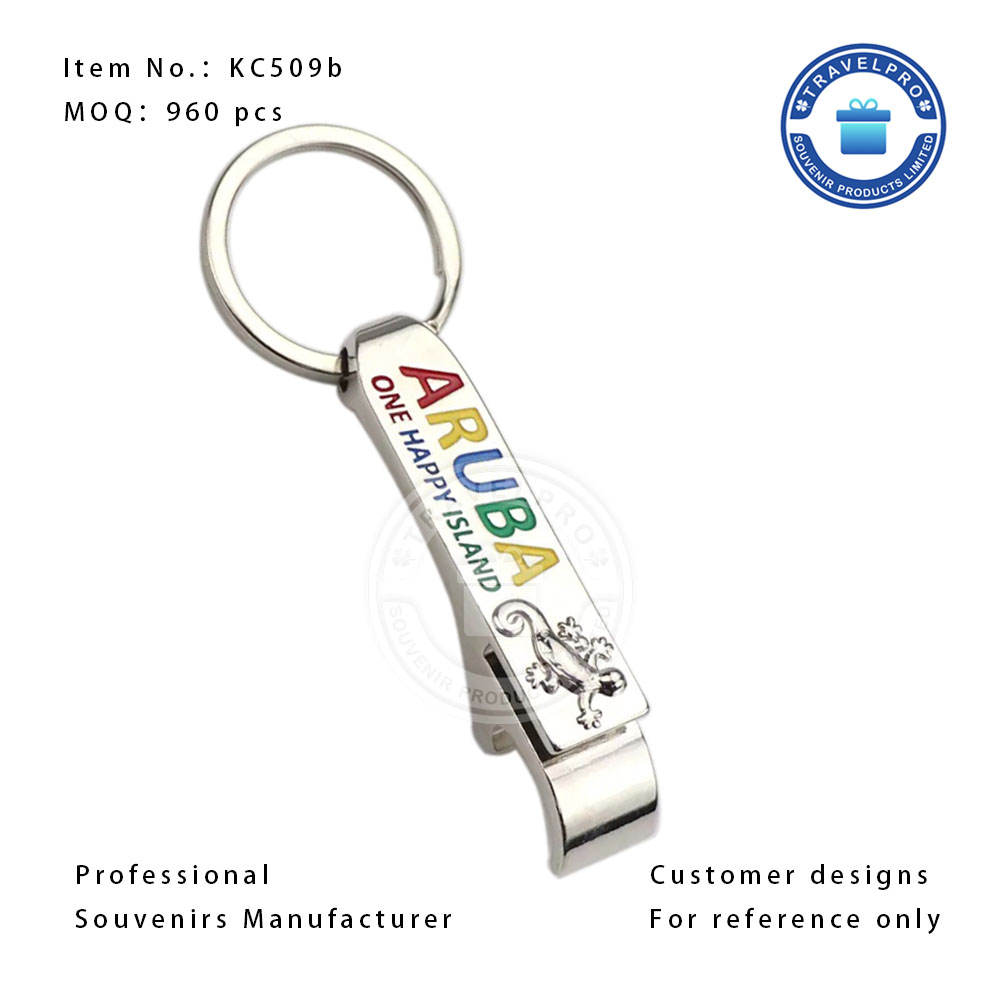
Different environments demand different product builds. You cannot apply a one-size-fits-all approach to hardware. Aligning your specs to the end use guarantees better returns. Carefully consider who will receive the item.
Trade shows require mass distribution strategies. Speed matters immensely here. Low unit cost drives the primary purchasing decision. You need broad appeal across demographics. Your priority should focus on lightweight aluminum. Choose standard, pre-existing shapes to avoid mold fees. Specify bulk polybag packaging to save on manual labor.
Retail environments change the rules completely. A tourist gift keychain must convey high perceived value. Aesthetic appeal drives impulse purchases at the register. Margin potential depends entirely on perceived quality. Your specification priority shifts heavily toward premium materials. Demand heavyweight zinc alloy frames. Specify custom backer cards for retail pegboards. Incorporate vibrant enamel color fills to catch the buyer's eye.
Special events demand unique keepsakes. A memorable souvenir bottle opener focuses heavily on thematic alignment. Attendees want a physical reminder of their experience. Prioritize specific date and location engraving. Consider including secondary utility features. A built-in LED flashlight adds daily value. A robust carabiner clip increases everyday carrying convenience.
Technical details extend well beyond the physical product itself. Logistics often dictate campaign success or failure. Creating accurate bulk keychain specifications protects your budget. It also ensures on-time delivery for crucial events.
Packaging choices drastically impact fulfillment timelines. You must detail the exact packing method required. "Bulk packed" represents the cheapest option available. All items go into one large bag. However, this creates a high risk of items scratching each other during transit. "Individually polybagged" offers essential baseline protection. It adds minor labor costs. "Custom retail carded" provides the highest presentation value. It requires significant assembly time. Clarify these details early.
Metal behaves as a dense, heavy cargo. Specifying a denser material exponentially impacts air freight costs. You must master the landed cost calculation. Many buyers make a critical mistake here. They only look at the raw unit price. You must calculate the true Landed Cost. The formula includes the Unit Price plus Freight plus Duties. Air freight for zinc alloy can sometimes double your per-unit cost. Ocean freight saves money but requires months of lead time. Plan your timelines accordingly.
Factories operate strictly on economies of scale. Clarify standard industry Minimum Order Quantities (MOQs) upfront. Standard stamped shapes might require 500 units. Custom die-cast molds often demand 1,000 units minimum. Warn your procurement team against vendors offering unrealistically low MOQs. If a factory offers a custom mold for 50 units, beware. This often signals subcontracting to unvetted secondary factories. It leads directly to severe quality control nightmares.
Common Mistake: Failing to account for volumetric weight. Couriers charge based on box size or actual weight, whichever is greater. Efficient, tight packaging reduces volumetric penalties significantly.
Finding the right manufacturing partner takes serious diligence. You cannot trust a catalog image alone. You need a structured validation process to protect your investment.
Look for transparent compliance documentation immediately. Ask for lead-free certifications for all metal components. Request Prop 65 compliance documents if you plan to ship into California. Trustworthy suppliers provide these files without hesitation. Dodgy vendors will stall or make continuous excuses.
Never skip the physical testing phase. Define the Pre-Production Sample (PPS) as a non-negotiable step. Enforce this for any order exceeding $2,000. Do not approve mass production based solely on a digital proof. You must hold the physical item in your hands.
Follow this numbered checklist for your rigorous PPS review:
Your Purchase Order serves as your ultimate legal safety net. Ensure the PO explicitly lists all approved PMS colors. Include exact dimensional tolerances in millimeters. Finally, establish hard delivery deadlines. Always include financial penalty clauses for late delivery. This keeps the factory accountable throughout the production run. It ensures they prioritize your project over others.
A successful bulk order relies entirely on detailed, technical specifications. You cannot just point to a picture in a catalog and hope for the best. Precision in your documentation prevents costly manufacturing disasters.
Draft a comprehensive specification sheet before requesting any quotes. Include dedicated sections for Material, Imprint, Packaging, and Quantity. This strict format ensures you receive apples-to-apples vendor comparisons. It removes ambiguity from the quoting process.
Request a sample pack from prospective suppliers today. Alternatively, consult directly with a seasoned procurement specialist. You need to feel the material differences firsthand. Do this before committing your marketing budget to a massive production run.
A: Standard domestic stock with local engraving takes 1–2 weeks. Fully custom molded orders from overseas typically require 4–6 weeks (including mold creation, PPS approval, and transit).
A: Specify laser engraving or an epoxy-domed finish. Avoid standard pad printing directly on the metal without a protective clear coat.
A: Generally, yes. Heavier metals like zinc alloy resist bending better than thin aluminum, providing superior leverage for opening bottles and a higher perceived value.
A: Yes. Always ask if the quote includes setup fees, custom mold charges, individual packaging labor, and duties/freight to the final destination (landed cost).

