
Views: 0 Author: Site Editor Publish Time: 2026-09-23 Origin: Site


Tour operators primarily sell unforgettable experiences and lasting memories. However, physical merchandise remains a massive driver of post-tour average order value and ongoing brand recognition. Customers want tangible keepsakes to remind them of their adventures. Moving from a simple design idea to a physical retail rollout requires strategic planning. You must navigate hardware durability, find reliable vendors, and master point-of-sale merchandising. Failing to plan these installation phases leads to unsold inventory and frustrated buyers.
This article provides a comprehensive blueprint to help you evaluate materials, source dependable manufacturing partners, and build a highly profitable retail display. You will discover exactly how to choose the right custom logo souvenir keychain for your specific audience. We also cover practical inventory management tips to maximize your return on investment while elevating your retail operation.
Durability Equals Brand Trust: Tourist environments demand rugged hardware; failing split rings or chipped enamel reflect poorly on the tour operator's brand.
Strategic POS Installation: Successful keychain sales rely on high-visibility, impulse-buy placement at ticketing desks, exit kiosks, or via tour guide mobile setups.
Supplier Vetting is Critical: Choosing a qualified custom logo souvenir keychain supplier requires evaluating minimum order quantities (MOQs), prototyping policies, and defect resolution terms, not just unit cost.
Data-Driven Inventory: Mitigate dead stock risks by starting with conservative initial batches and split-testing two to three design variations before scaling.
Merchandise reflects your brand quality long after the vacation ends. You must establish strict custom logo souvenir keychain specifications before contacting any manufacturer. Poor material choices often result in negative customer feedback. We highly recommend evaluating materials based on your specific tour environment.
Operators must choose between enamel, rubber, or alternative materials based on their audience. Hard enamel provides a premium, smooth finish. It feels similar to jewelry. This makes it ideal for luxury cruises, wine tours, or VIP excursion packages. Manufacturers polish the surface until the metal and color sit flush.
Conversely, soft enamel offers a textured, dimensional feel. It remains highly cost-effective for large volume orders. Family attractions and theme parks frequently utilize soft enamel. You can easily feel the metal ridges separating the vibrant colors.
Adventure tour operators face unique environmental challenges. Whitewater rafting companies or jungle zip-lining operators should strongly consider PVC and rubber options. Metal keychains might rust from constant water exposure. They can also scratch phones or cause minor injuries during intense physical transit. Flexible PVC survives extreme conditions easily.
The material comparison chart below helps clarify these primary options.
Material Type | Best Use Case | Visual/Tactile Feel | Relative Cost |
|---|---|---|---|
Hard Enamel | Luxury tours, VIP packages, Museums | Smooth, polished, premium weight | Highest |
Soft Enamel | Family attractions, Sightseeing buses | Textured, vibrant, distinct ridges | Moderate |
PVC / Rubber | Adventure sports, Water parks | Flexible, lightweight, waterproof | Lowest |
A beautiful design loses all value if the attachment hardware fails. You must evaluate split ring tension and jump ring thickness carefully. A lost key means a highly frustrated customer. They will ultimately associate this frustration directly with your brand.
Coastal operators face aggressive salt air environments. High-humidity regions accelerate metal oxidation. You must specify rust-resistant plating during production. Zinc alloy base metals coated in protective finishes perform exceptionally well here. Stainless steel hardware prevents unsightly rust transfer onto customer keys.
Generic gift shop items rarely build strong brand loyalty. When transitioning from generic items to a fully custom custom custom logo souvenir keychain, ensure the design scales down cleanly. Most keychain canvases measure between 1.5 and 2 inches. Highly complex logos often turn into unreadable blobs at this size.
Simplify your artwork. Bold outlines and contrasting colors work best. Limit your design to four or five distinct colors. Remove tiny text elements entirely. The primary goal is instant visual recognition, not a detailed informational plaque.
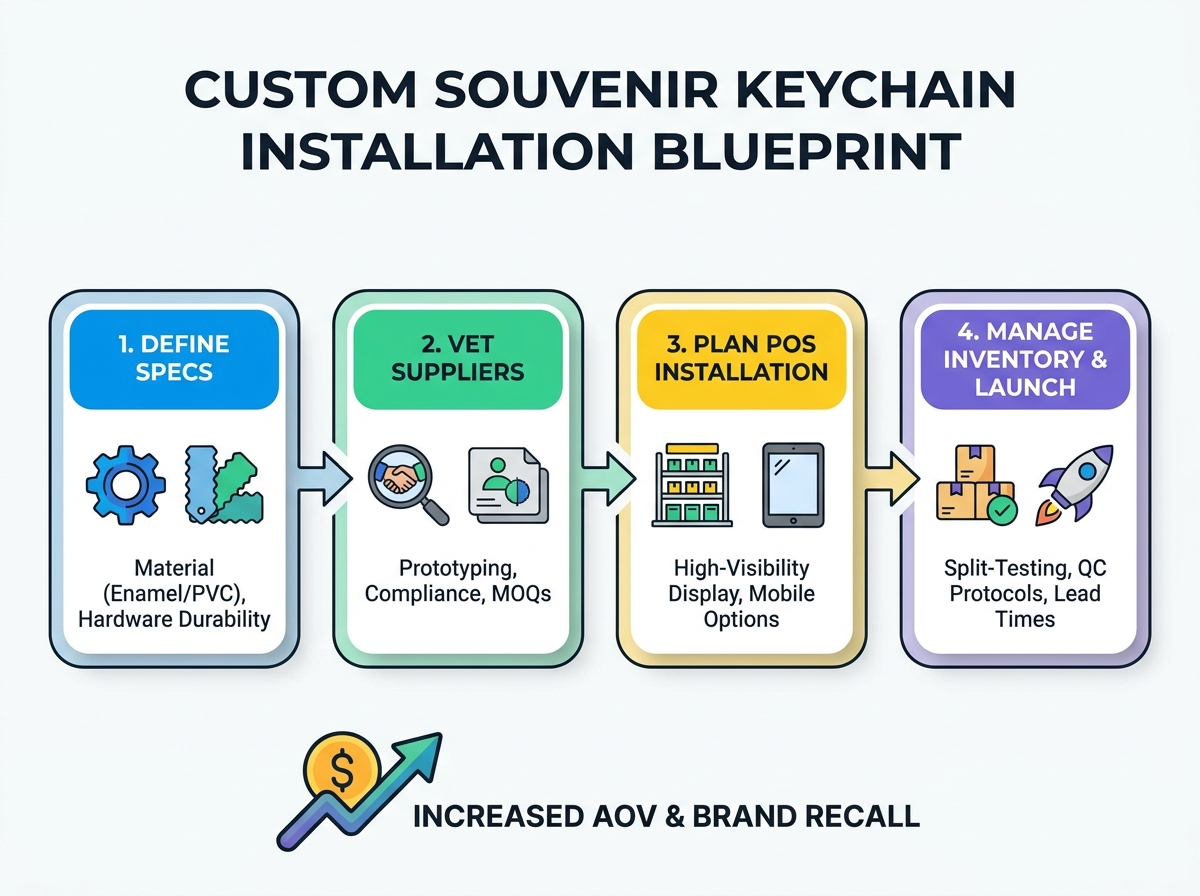
Designing a great product represents only half the battle. Presenting it effectively to tourists drives actual revenue. You must optimize your physical footprint to trigger impulse purchases.
Your ticketing kiosk or checkout counter possesses limited real estate. You need to assess this footprint before ordering display fixtures. Countertop spinners maximize product density perfectly. They hold dozens of designs in a compact vertical space. Customers enjoy interacting directly with rotating displays.
Alternatively, slatwalls integrate smoothly into existing gift shop builds. They provide a cleaner, highly organized aesthetic. If you operate an upscale boutique, slatwalls prevent the cluttered look often associated with cheap souvenirs.
We strongly recommend utilizing the "Exit Flow" strategy. You should position tour operators custom logo souvenir keychain displays at the emotional peak of the customer journey. Photo-pickup stations serve as ideal locations. Immediate tour exits also work brilliantly. Customers feel euphoric right after an amazing experience. They are highly motivated to purchase a keepsake at this exact moment.
Many independent operators lack physical storefronts. Walking tour guides and outdoor excursion leaders face unique retail challenges. You can still drive significant merchandise revenue through mobile merchandising.
Equip your tour guides with standardized, wearable display lanyards. They can clip a few premium samples directly to their uniform. You can also integrate small display hooks onto tablet-POS cases. Guides can sell items directly at the end of an excursion while processing digital tips. This seamless approach requires zero dedicated retail space.
Standalone souvenir purchases often face friction. You can structure pricing to encourage natural bundle purchases. Combine physical goods with digital media. For example, offer a deal saying, "Add a customized keychain to your digital photo package for just $5."
Bundling obscures the standalone cost of the item. It increases your overall average order value easily. Customers perceive higher value when receiving both digital memories and physical keepsakes simultaneously.
Your manufacturing partner dictates your retail success. Finding a dependable vendor requires diligent vetting. You cannot simply select the cheapest overseas factory and hope for the best.
Look for vendors demonstrating deep experience in tourist and hospitality merchandise. Producing generic corporate promotional items requires different skill sets. A specialized custom logo souvenir keychain supplier understands retail-ready packaging. They know how to attach barcode hangtags securely. They understand the durability requirements of adventure tourism.
Protect your investment by utilizing a structured evaluation process. Follow these standardized steps before transferring any funds.
Audit Prototyping Policies: Never skip the physical sample phase. Digital proofs cannot verify hardware weight. They cannot accurately reflect enamel colors under physical retail lighting. Pay the sampling fee to guarantee quality.
Analyze MOQs and Tiered Pricing: Balance the lowest unit cost against the massive risk of over-ordering. Reliable suppliers offer scalable volume tiers. They do not enforce massive upfront commitments on new clients.
Verify Compliance and Sourcing: Ensure the manufacturer uses lead-free, non-toxic paints. Verify they use safe base metals. Your products must align strictly with consumer safety regulations in your specific operating region.
Check Communication Speed: Time zones create natural delays. However, a professional supplier responds comprehensively within 24 hours. Poor communication during the quoting phase guarantees disaster during production.
Establishing clear defect resolution terms upfront saves money. Ask the supplier how they handle misprints or broken chains. Will they refund the defective units or replace them on the next order? Get these terms in writing.
Retail operations introduce new logistical headaches for service-based businesses. You must actively manage your inventory flow to prevent financial losses.
Dead stock drains profitability quickly. You must avoid committing your entire budget to a single, unproven design. Allocate your initial budget strategically. Use 20% of the budget to split-test a classic brand logo variant against a tour-specific mascot variant.
Tourists often prefer location-specific designs over plain corporate logos. A keychain featuring a local landmark usually outsells a plain company name. Track which design moves faster during the first month. Reorder only the winning variants. This data-driven approach eliminates emotional guessing.
Physical merchandise requires patience. You must factor in standard three to five week production cycles. Ocean freight adds several more weeks to this timeline. Air freight speeds things up but drastically reduces your profit margin.
Plan your installation and launch dates well ahead of peak tourist seasons. If your busy season starts in May, you must finalize designs in February. Running out of stock during high-revenue weeks leaves easy money on the table. Create a calendar mapping out reorder trigger points based on current sales velocity.
Never place boxes directly from the manufacturer onto your retail floor. Establish a strict internal checklist upon receiving new inventory. Dedicate time to inspect the shipment thoroughly.
Enamel Spillover: Check the edges where colors meet. Ensure no paint bleeds into the wrong section.
Weak Chain Links: Tug firmly on random samples. The jump rings should not pull apart easily.
Misaligned Logos: Verify center alignment for any printed or stamped elements.
Packaging Integrity: Ensure all barcode stickers and backing cards remain unbent and scannable.
Isolate any defective units immediately. Document them with clear photos. Send this evidence to your supplier to claim credit on your subsequent order. Consistent quality control ensures your customers only buy premium items.
A highly profitable retail rollout requires much more than a pretty logo. True success hinges on defining strict hardware specifications, executing smart POS installation, and partnering with a specialized manufacturer. You must focus heavily on product durability to protect your brand reputation. Positioning your merchandise at the emotional peak of the tour ensures maximum impulse conversion.
Your immediate next step involves finalizing your core artwork files. Convert them into clean vector formats. Next, reach out to shortlisted suppliers and request initial physical samples. Test the hardware weight and color accuracy yourself. Start with conservative batches, analyze the sales data, and scale your inventory intelligently.
A: Merchandise in the tourism sector typically yields 70% to 85% gross margins. Landed costs usually range between $0.80 and $1.50 per unit depending on materials and volume. Operators commonly retail these items for $5.00 to $8.00, generating substantial passive revenue per transaction.
A: Expect an 8-week timeline overall. Allocate one week for design and proofing. Allow two to three weeks for physical sampling and revisions. Mass production and shipping take another three to four weeks. Finally, spend a few days setting up your physical displays.
A: Yes, in many cases. Water sports and intense outdoor excursions expose metal to rust and impact damage. Heavy metal can scratch expensive gear. Adventure operators should utilize flexible PVC or rubber alternatives. They remain waterproof, lightweight, and incredibly durable in extreme conditions.

