
Views: 0 Author: Site Editor Publish Time: 2026-09-02 Origin: Site


Sourcing retail-ready souvenirs demands a careful balancing act. You must constantly weigh unit costs against perceived retail value. Sourcing low-quality plastics risks cheapening a destination brand entirely. Conversely, relying on precious metals instantly destroys your profit margins. Buyers need a reliable solution bridging long-lasting durability, a heavy-weight feel, and intricate 3D customization. For high-margin, premium retail placements, a zinc alloy souvenir magnet solves this exact dilemma. It elevates the final product without breaking procurement budgets.
In this guide, we will explore the technical and commercial criteria needed to specify materials accurately. You will learn how to evaluate various die-casting options. Finally, we will show you how to vet OEM manufacturers objectively. These insights will equip you to make profitable procurement decisions for maximum retail success.
Choosing the correct substrate dictates everything from production speed to retail shelf life. When evaluating a custom magnet material, buyers often experiment with cheaper alternatives. However, these materials usually present significant commercial drawbacks.
Resin is highly prone to chipping during international transit. It often suffers from high defect rates once tossed into crowded retail bins. Stamped iron offers a cheaper baseline but limits designs to flat, 2D profiles. Furthermore, iron rusts easily if the factory applies poor surface plating. Soft PVC sits at the bottom of the pricing tier. It carries a low perceived value and rarely commands a premium retail price. Tourists often ignore PVC options when seeking a memorable keepsake.
Zinc alloy provides a distinct structural advantage. It exhibits high fluidity during the melting phase. This characteristic allows the molten metal to fill microscopic crevices inside the mold. The result is extreme detail and striking multi-layered 3D topography. You can capture architectural features, intricate lettering, and complex textures flawlessly.
Additionally, zinc alloy features a heavier "hand-feel." When consumers pick up a heavy item, they instinctively associate it with higher quality. This psychological trigger directly translates to premium pricing leverage in retail environments. Non-corrosive baseline properties also reduce long-term shelf degradation. Your inventory will not rust or degrade while waiting to be sold.
You must acknowledge the cost-to-volume considerations. Initial mold fees require a calculated Minimum Order Quantity (MOQ). Paying for a CNC-machined mold only makes financial sense if you produce enough units to absorb the setup cost. Once you reach that threshold, the unit economics become highly profitable.
The material comparison summary below highlights how different substrates stack up against core retail metrics.
| Material Type | 3D Capability | Durability | Perceived Value | Initial Tooling Cost |
|---|---|---|---|---|
| Zinc Alloy | Excellent (Multi-level) | High (Shatterproof) | Premium | Moderate to High |
| Resin | Good (Sculptural) | Low (Brittle) | Medium | Low |
| Stamped Iron | Poor (2D Only) | Medium (Rust risk) | Medium to Low | Low |
| Soft PVC | Moderate (Layered) | High (Flexible) | Low | Very Low |
Procuring a die cast souvenir magnet requires strict quality control parameters. You cannot rely on a factory's word alone. You must evaluate physical samples across four distinct dimensions to guarantee retail viability.
First, inspect the 3D relief precision. Look for sharp transitions in the mold. Poor zinc casting traps gas bubbles or fails to fill the cavity entirely. This defect results in "soft" or blurry edges on text and architectural details. You should easily read fine typography without straining. If the sample looks melted or undefined, the manufacturer likely uses degraded molds or incorrect injection pressures.
Next, scrutinize the surface plating integrity. Plating adds the final metallic color, such as gold, silver, or bronze. Check closely for bubbling, flaking, or uneven oxidation. Demand evidence of their electroplating quality control. A reliable factory will monitor chemical bath temperatures precisely to ensure a flawless, even coat. Bad plating will peel off within months, leading to customer complaints.
Enamel application acts as another critical evaluation point. If adding color, define the need for recessed or flush enamel. We call recessed coloring "soft enamel." The metal ridges sit higher than the painted areas, providing a tactile feel. "Hard enamel" involves overfilling the cavities, baking the piece, and polishing it flush. Hard enamel offers a smooth, glass-like finish but costs more. Choose based on design complexity and budget constraints.
Finally, examine the backing attachment method. A heavy metal fridge magnet requires robust engineering. It needs high-grade industrial adhesives and strong magnet cores. Specify Neodymium magnets over cheap rubber strips. Rubber magnets lack the Gauss rating necessary to hold dense metal against vertical surfaces. A premium magnet failing to stick to a refrigerator instantly ruins the consumer experience.
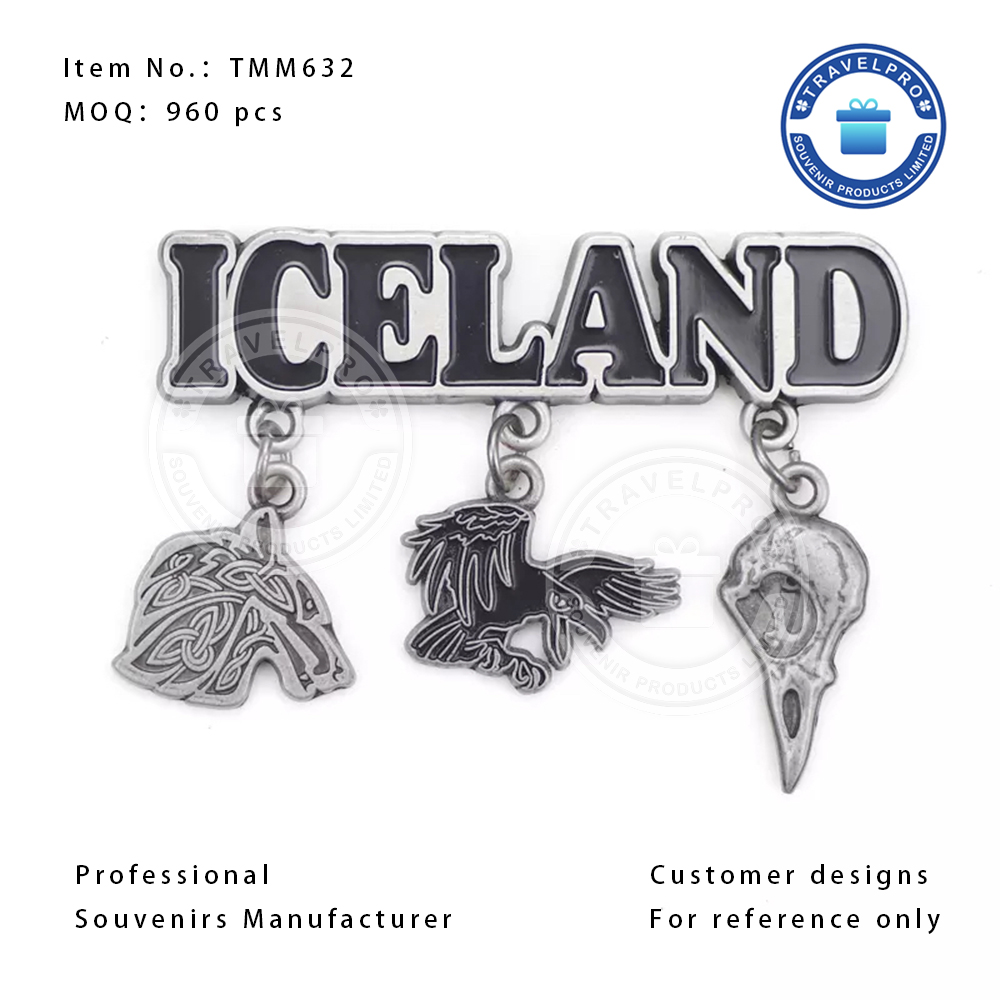
A successful retail strategy requires matching the product's aesthetic to your target demographic. Zinc alloy adapts brilliantly to various finishing techniques. You must select the finish that aligns with your specific tourist or corporate audience.
Different markets expect different visual cues from their souvenirs. We can categorize the most effective customization approaches into three distinct paths.
By tailoring the finish, you control the emotional appeal of the product. A gothic cathedral demands an antique silver look. Conversely, a modern tech company's swag magnet needs a mirror-polished nickel surface. Aligning material finishes with brand identity ensures higher conversion rates at the point of sale.
Sourcing overseas introduces inherent operational risks. Successfully procuring a wholesale magnet order requires proactive logistical planning. You must manage timelines, shipping weights, and regulatory compliance rigorously.
Tooling and lead times often catch new buyers off guard. Die-casting molds take significant time to machine using CNC equipment. You must factor in 2 to 3 weeks solely for sampling and mold creation. Only after you approve the physical sample can mass production begin. Rushing this phase leads to irreversible mold errors. Always build a one-month buffer into your seasonal buying schedule.
Weight and shipping costs pose another major hurdle. Zinc alloy is inherently dense. You must calculate landed unit costs carefully. Relying on air freight for dense metal items can entirely destroy your profit margins. Ocean freight remains the only viable option for large volume runs. Work with your freight forwarder early to compare volumetric weight versus actual weight pricing.
Environmental and compliance standards are non-negotiable. Ensure the manufacturer uses lead-free and nickel-safe zinc alloys. The Zamak series (specifically Zamak 3 or Zamak 5) serves as the industry standard. This becomes critical if you are selling in highly regulated markets like the European Union or California. Regulatory bodies actively enforce RoHS, REACH, and Proposition 65 guidelines. Selling non-compliant metal souvenirs can result in severe fines and mandatory inventory destruction.
Finding a competent OEM manufacturer requires more than browsing online directories. You need a systematic approach to vet suppliers and protect your investment.
Start by requesting concrete proof of quality. Never buy based on digital 3D renders alone. Renders look perfect on screen but hide manufacturing realities. Request physical samples of their past work. Hold the pieces in your hand. Evaluate the weight, inspect the edge sharpness, and physically test the magnet strength on a metal surface. This tactile evaluation reveals a factory's true capabilities.
Assess their OEM capability directly. Ask if they handle mold creation in-house or outsource it to third parties. In-house tooling dramatically reduces delays and revision costs. If an issue arises with the sample, an in-house machinist can adjust the mold overnight. Outsourced tooling often takes weeks to correct. Furthermore, clarify their standard defect allowances. The acceptable industry standard for premium die-casting should fall below 2%.
Finally, draft a comprehensive Request for Quote (RFQ). Vague inquiries yield inaccurate pricing. Define your exact dimensions, target thickness, specific plating type, and enamel color counts. Provide exact quantity breaks (e.g., 500, 1000, 2500 units) to get an accurate blended cost. A detailed RFQ forces the manufacturer to provide transparent tooling and unit pricing, eliminating hidden fees later.
Zinc alloy remains the definitive choice for premium, durable, and highly detailed 3D magnets. It outpaces resin and iron by offering unmatched structural fluidity and a heavy, premium feel. While upfront mold costs exist, the resulting retail leverage makes it highly profitable for volume orders.
To move forward successfully, consolidate your vector design files and color references. Reach out to verified OEM partners for an initial tooling assessment. Request a physical sample pack immediately to experience the weight and finish quality firsthand. By strictly managing material specs, mold precision, and freight logistics, you will secure high-margin products that elevate your brand.
A: No, zinc alloy does not rust like iron, though improper plating can tarnish or oxidize. Proper clear-coating prevents this. When factories apply strict electroplating and finishing techniques, the metal remains stable and visually striking for years on a retail shelf.
A: Typically ranges from 300 to 500 units to absorb the upfront CNC mold-making costs efficiently. Producing quantities below this threshold causes the per-unit cost to spike, making it difficult to maintain healthy retail profit margins.
A: The manufacturer likely used a low-grade rubber magnet that cannot support the specific gravity of the zinc alloy. Specify hard ceramic or neodymium inserts for heavy designs. A strong magnetic core is essential to support the dense metal structure.

