
Views: 0 Author: Site Editor Publish Time: 2026-08-23 Origin: Site


Navigating minimum order quantities feels straightforward when you source a single flagship product. You find a reliable factory, agree on a price, and place your order. However, allocating a production budget across multiple designs complicates matters immensely. Retailers constantly need diverse regional variations, seasonal themes, and unique landmarks to stock their shelves effectively. Suppliers usually enforce minimums based on machine setup times and physical mold creation. This means they apply minimum limits strictly per design. They rarely base minimums on your total cart volume.
This guide breaks down how purchasing managers can structure mixed orders efficiently. We will explore methods to mitigate inventory risk alongside tactics to negotiate mixed-design runs. You will learn to maintain strong unit economics without tying up excess capital in unproven merchandise. Success requires aligning your retail variety needs against the factory’s mechanical constraints.
Factories enforce a strictly calculated custom souvenir MOQ to offset fixed setup expenses. Creating die-casting molds takes significant labor. Burning silk-screen meshes requires dedicated time. Technicians must calibrate heavy machinery before a single product rolls off the line. Setting up a production run for fifty items costs the factory the exact same baseline labor as setting up for five thousand items. Therefore, they mandate high minimums to ensure profitability.
Retail buyers face a difficult dilemma. Modern stores need deep SKU diversity to test changing market preferences. Shoppers expect to see various city landmarks and colorful local mascots on display. Ordering the supplier's strict minimum for every individual variant requires massive upfront capital. This approach practically guarantees excess inventory on slower-moving regional designs.
You must understand the critical difference between global and per-SKU minimums. Global MOQ represents the total number of units the factory requires to accept your contract. They might ask for five thousand total pieces. Per-SKU MOQ represents the minimum units required for one specific variant. They might demand one thousand pieces per individual design. Novice buyers often assume a five-thousand global minimum means they can mix fifty different designs at one hundred units each. Manufacturers will almost always reject this.
Success at the decision stage requires a balanced evaluation lens. You must align your immediate need for retail shelf variety against the factory’s demand for uninterrupted production efficiency. Both parties must find operational harmony.
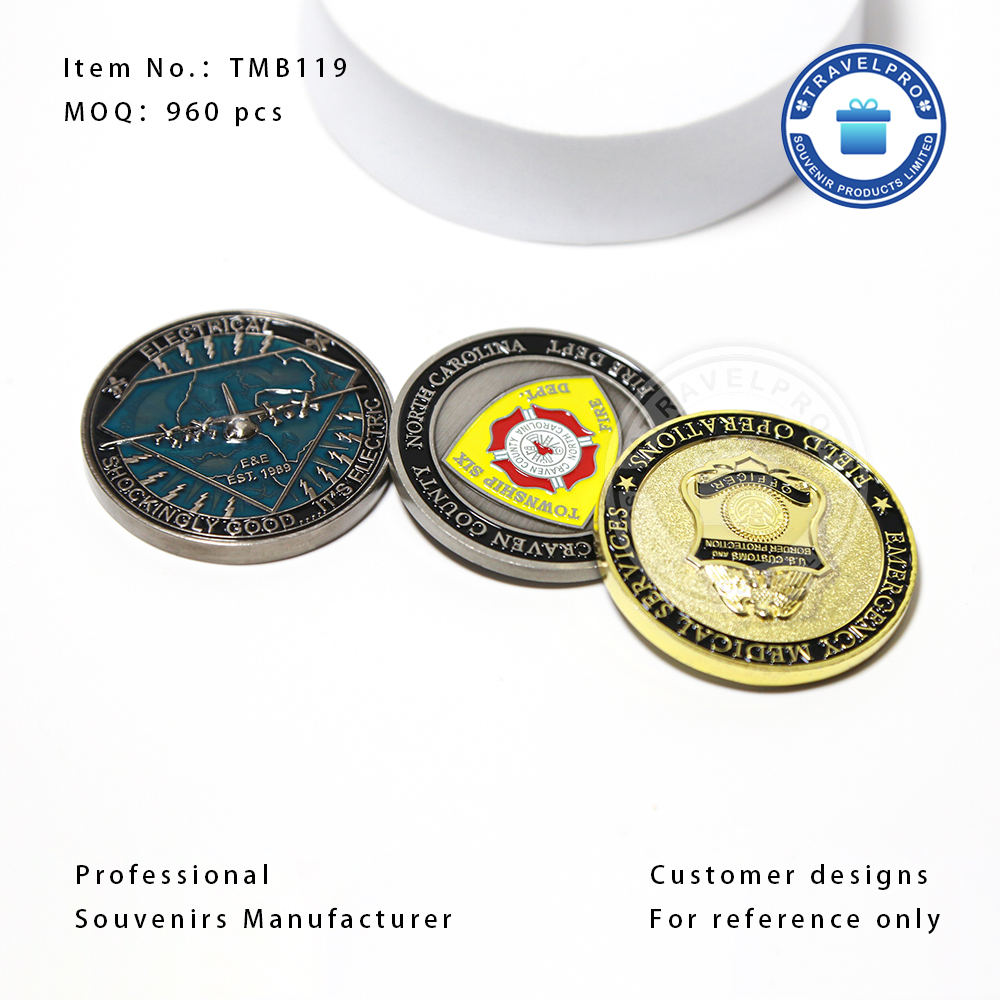
You can optimize a multi-design souvenir order by adopting creative sourcing frameworks. Clever buyers manipulate product specifications to trick the manufacturing line into seeing one continuous job.
This phased rollout strategy contains specific risks. It strictly requires finding a partner equipped for custom souvenir production via digital methods. Traditional analog manufacturers cannot efficiently execute micro-runs. Enamel pin makers must stamp metal physically. They will pass severe setup penalties onto your final invoice if you request tiny secondary batches.
Buyers often fall into the trap of the volume discount. Securing a fifteen percent unit cost reduction by ordering two thousand units per design instead of five hundred feels like a victory. It is only profitable if those items sell through completely within your target fiscal quarter. Excess goods destroy capital.
You must calculate comprehensive expenses during your wholesale souvenir planning phase. The basic formula requires combining your base unit costs multiplied by total units. You then add mold setup fees, international shipping freight based on total volume, and domestic holding costs for unsold merchandise. Do not ignore warehouse storage fees.
| Production Strategy | Upfront Setup Fees | Unit Cost | Long-term Holding Cost | Risk Level |
|---|---|---|---|---|
| High Volume Per SKU (Rigid MOQ) | Low (Amortized) | Lowest | Very High | High (Dead stock likely) |
| Shared Mold Framework (Mixed Designs) | Moderate (Single Mold) | Medium | Low | Low (High flexibility) |
| Micro-Runs via Digital Printing | Zero (Digital files only) | Highest | Zero | Very Low |
You need a clear decision threshold. Look closely at the holding cost of excess inventory across your multiple designs. If that storage cost exceeds the upfront setup fees of a smaller shared-design run, you should change strategies. Choosing a lower overall volume at a slightly higher unit price represents the most financially sound choice.
This evaluation relies on transparent assumptions. We assume the buyer manages finite warehouse space. We also assume they operate under typical cash-flow constraints found among mid-market retailers or regional distributors. Capital tied up in dusty boxes cannot fund new marketing campaigns.
Assessing vendor capabilities correctly dictates the success of mixed runs. You must evaluate their machinery before sending a purchase order. Digital suppliers differ vastly from analog suppliers. Factories utilizing modern UV printing or laser engraving offer incredible flexibility. They load a new digital file and keep the machine running. Those relying on traditional stamping, physical molding, or manual screen printing offer very little flexibility.
Material constraints also dictate vendor flexibility. Custom plush toys require fabric cutting, hand sewing, and stuffing. Custom ceramics require baked clay molds. These materials will always carry strict, inflexible per-design minimums. Conversely, flat metal, acrylic sheets, and laser-cut wood allow for aggressive negotiation. They require less manual intervention per variant.
Do not assume your factory uses digital printing just because they produce modern-looking goods. Always ask explicitly about their decoration methods. Screen printing looks crisp but requires burning a new mesh screen for every single color on every single design variant. This destroys small-batch budgets.
Structuring your Request for Quote determines how suppliers perceive your leverage. You must capture their attention immediately. Clearly state your total estimated volume in the very first sentence. If you plan to order ten thousand units total, make that number bold.
Provide a clean table detailing the exact number of designs. Show the target volume per individual design clearly. You must ask an explicit question. Frame it exactly like this: "What is your minimum order quantity per specific design if we commit to ten thousand total units across five designs using the same base material?" This forces the supplier to calculate a mixed-assortment price.
Implement a strict sample proofing strategy. You should never commit to a massive multi-design run without negotiating a pre-production sample. Request these samples for at least two distinctly different designs. You must verify color accuracy across the variants. You must also check the physical mold quality to ensure the base shape supports varied artwork.
Your final decision matrix must prioritize transparency. Shortlist only those suppliers who offer crystal-clear breakdowns of fixed setup costs versus variable unit costs. This transparency allows you to accurately model your inventory risk before signing the final Purchase Order. Avoid partners who bundle all costs into a single opaque per-unit price.
Successfully planning a multi-design souvenir order requires shifting your dialogue with suppliers. You must stop asking "how many units must I buy?" and start asking "how can we structure this production run efficiently?" You achieve this by leveraging shared base materials across varied surface designs. Prioritizing digital production methods allows you to bypass expensive analog setup fees.
You must meticulously calculate long-term holding expenses against upfront unit discounts. Do not let a cheap unit price blind you to the dangers of dead stock. Buyers can secure the rich SKU variety their retail channels demand. They simply need to structure their manufacturing runs smartly to avoid absorbing crippling inventory risks.
A: Usually, yes. Changing only the color often incurs a small machine-reset fee rather than a full new-design MOQ. This applies to modifying plating colors on metal keychains or fabric colors on tote bags. The physical mold must remain absolutely identical for this to work.
A: It depends heavily on the manufacturing method. Changing text or logos is highly flexible for digital printing or laser engraving. It rarely triggers a strict new MOQ. For screen-printing or custom molding, a new logo requires a new mesh screen or die. The supplier will likely treat it as an entirely new SKU.
A: Focus your negotiation entirely on material consolidation. Offer to use the exact same dimensions, material thickness, and retail packaging for all designs. This heavily reduces the supplier's raw material risk. It gives them the operational margin necessary to allow a mixed-assortment MOQ.

